

A sick day changes the whole shape of the world. The bed feels deeper, the room feels quieter, and even the smallest sounds—the kettle clicking off, a message buzzing on a phone, the soft rustle of blankets—can seem far away. Being sick is often less about one dramatic moment and more about a strange, slowed-down version of life: the body feels heavy, the mind feels wrapped in cotton, and ordinary tasks suddenly ask for enormous effort.
That is why metaphors for being sick are so useful. Illness can be hard to describe plainly because it affects the body, the mind, and the mood all at once. A strong metaphor can help writers and speakers express fatigue, discomfort, vulnerability, and the quiet patience of healing in a way that feels clear and human. It gives shape to sensations that often seem too blurry or too private to explain.
Whether you are writing a journal entry, a story, a poem, a social post, or simply trying to explain to someone how you feel, metaphors for being sick can make your words more vivid, compassionate, and memorable.
Why Metaphors for Being Sick Matter in Writing and Everyday Language
They make difficult feelings easier to explain
When you are sick, it can be hard to describe what the body is doing. A metaphor can turn that invisible experience into an image: a body that is weathering a storm, a mind that is running on low power, a spirit that feels wilted.
They capture more than symptoms
Illness is not only physical. It can bring frustration, sadness, restlessness, fogginess, or even quiet relief when rest finally arrives. Metaphors can hold those extra layers.
They make writing more memorable
A sentence like “I felt sick” is clear, but a sentence like “my body felt like a house caught in winter” stays in the reader’s imagination much longer.
Three Powerful Metaphors for Being Sick
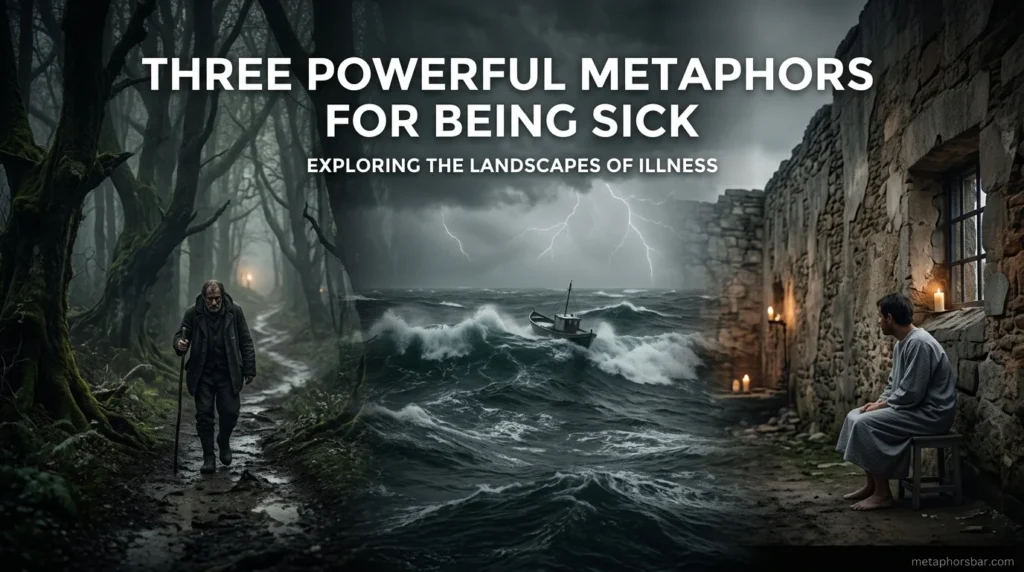
1. Being Sick as a Storm Inside the Body
A storm is one of the most natural metaphors for sickness because illness often feels like something moving through the body with force, unpredictability, and discomfort. Fever, nausea, aches, chills, and exhaustion can all seem like different kinds of weather happening at once.
Meaning and explanation
When being sick is compared to a storm, it suggests turbulence, pressure, and instability. The body no longer feels calm or settled; it feels tossed around by something larger than itself. This metaphor works especially well when sickness is intense, sudden, or disruptive.
It is also useful because storms do not last forever. Even when the weather is rough, there is an understanding that it will pass. That makes this metaphor honest but not hopeless.
Example sentence or scenario
The flu hit her like a storm inside the body, bringing waves of fever, chills, and heaviness that made even sitting up feel like work.
This metaphor works well in personal writing, fiction, and reflective descriptions of being unwell.
Alternative ways to express it
- a thunderstorm under the skin
- weather turning wild inside
- a hurricane of fatigue
- a body caught in rough weather
- a private storm of aches and fever
Sensory and emotional details
You can imagine sweating and shivering at the same time, the pounding pulse in the head, and the strange feeling that your own body is not entirely cooperating. Emotionally, this metaphor feels intense, restless, and a little helpless. It captures the sense that sickness can overtake normal life like bad weather moving in without warning.
Mini storytelling touch
A child once described waking up with the stomach bug as “feeling like thunder kept happening in my tummy.” That image is simple, but it works because children often tell the truth of sickness more directly than adults do. Their bodies feel like weather, and so do ours when illness takes over.
Literary or cultural reference
Storms have long been used in literature to represent turmoil, disruption, and change. As a metaphor for being sick, the storm fits well because illness often turns an ordinary day into one of confusion and endurance.
2. Being Sick as a Phone Running Out of Battery
A low battery is a modern and very relatable metaphor for sickness, especially fatigue. When the body is sick, energy drains quickly, and tasks that are usually easy can suddenly feel impossible. This metaphor is especially useful when sickness feels like depletion rather than pain alone.
Meaning and explanation
Comparing sickness to a low or dying battery emphasizes energy loss, weakness, and the need to rest and recharge. It works beautifully for describing fatigue, brain fog, or the feeling of having very little left to give. The body is not broken in this image—it is simply low on power.
This metaphor is especially effective because almost everyone understands the frustration of a device giving warning signs before shutting down.
Example sentence or scenario
By noon, he felt like a phone running on one percent battery, every movement slow and every thought loading too late.
This metaphor is especially useful in casual writing, journaling, and everyday descriptions of being worn out by illness.
Alternative ways to express it
- running on empty
- a battery nearly dead
- power draining from the system
- energy on low charge
- a body that needs recharging
Sensory and emotional details
You can picture the dim screen of a phone, the warning icon, and the helplessness of not being able to do much before the battery dies. Emotionally, this metaphor feels tired, stripped down, and a little frustrating. It captures the sense that sickness can leave a person still functioning, but only just.
Mini storytelling touch
A woman recovering from a fever once told her friend, “I can feel my battery bar dropping just by making tea.” That image works because sickness often turns the most ordinary tasks into energy-consuming work. The battery metaphor says exactly that: the body is still there, but the power is running low.
Real-life example
People often use “running on empty” to describe exhaustion after being sick. The battery metaphor gives that feeling a clearer, more visual shape, especially in a world full of phones, chargers, and low-power warnings.
3. Being Sick as a Wilted Garden
A garden that has not been watered begins to droop. Leaves fold downward, stems lose their strength, and color seems to fade under heat or neglect. As a metaphor for sickness, a wilted garden is especially fitting for describing fragility, heaviness, and the feeling of being unable to bloom the way one usually does.
Meaning and explanation
This metaphor suggests that the sick body feels less vibrant, less upright, and less full of life than usual. It does not imply permanent damage; it simply shows the visible signs of strain. A wilted garden can be revived with care, time, and rest, which makes this image especially gentle and hopeful.
This metaphor works beautifully when sickness feels like a temporary loss of energy, color, or strength.
Example sentence or scenario
After three days of fever, she felt like a wilted garden—soft, drooping, and waiting patiently for water and sunlight to return.
This metaphor works well in poetry, reflective writing, and any description of illness that wants to feel tender rather than harsh.
Alternative ways to express it
- a plant bent by heat
- flowers hanging their heads
- a garden without rain
- a body losing its bloom
- leaves folded under the weight of heat
Sensory and emotional details
You can imagine dry soil, soft leaves, and the quiet sadness of something once bright now hanging low. Emotionally, this metaphor feels tender, weary, and restorative. It suggests that being sick can make a person feel less like themselves, but only temporarily—like a garden waiting to be revived.
Mini storytelling touch
A grandmother once looked at her grandson after a week of flu and said, “You look like a little plant that needs watering and a nap.” The child laughed, but the image was perfect. That is what makes the wilted garden metaphor work so well: it sees sickness as a state of needing care, not failure.
Literary or cultural reference
Gardens often symbolize life, growth, and renewal in literature. When sickness is compared to a wilted garden, it brings in the hope of recovery and the beauty of care returning something to health.
How to Choose the Right Metaphor for Being Sick
Use storm when sickness feels intense or chaotic
Choose this metaphor when the illness is sudden, dramatic, or physically overwhelming.
Use low battery when sickness feels like exhaustion and depletion
This is the best choice when the main feeling is fatigue, sluggishness, or mental fog.
Use wilted garden when sickness feels fragile but recoverable
Choose this image when you want to emphasize softness, care, and the hope of healing.
The best metaphor depends on the kind of sickness you want to describe. Illness can thunder, drain, or droop—and sometimes it does all three.
Interactive Exercises for Practicing Metaphors for Being Sick
Exercise 1: Complete the sentence
Finish this prompt in three different ways:
“Being sick felt like ______ because ______.”
Try one answer that focuses on the body, one on energy, and one on mood.
Example: Being sick felt like a storm because my body was full of noise, pressure, and the sense that I had no control over the weather inside me.
Exercise 2: Sensory mapping
Think of a time when you were sick or exhausted. Write down:
- one sound
- one texture
- one color
- one temperature
- one feeling
Then turn those details into a metaphor.
For example: It sounded like rain against a window, felt like heavy blankets, looked like gray morning light, seemed as cold as a windless room, and carried the feeling of being too tired to lift a thought.
Exercise 3: Story starter
Begin a short paragraph with:
“My body felt like…”
Let the image guide the tone. You can make it poetic, gentle, realistic, or reflective.
Exercise 4: Social media or journal prompt
Try writing a one-line reflection:
- “Today my body feels like a storm that needs to pass.”
- “I am running on one-percent battery and a lot of tea.”
- “Being sick feels like a wilted garden waiting for rain.”
Bonus Tips for Using Metaphors for Being Sick in Writing, Social Media, and Daily Life
In writing
Use these metaphors in memoirs, stories, poems, and essays to help readers feel the experience of illness more vividly and compassionately.
On social media
A short metaphor can make a post or update feel more personal and expressive. “Running on low battery today” is more vivid than “I’m tired.”
In conversation
Metaphors can help explain how you feel without overexplaining. Saying “I feel like a wilted garden” can communicate fatigue and tenderness in one image.
In journaling
If you are documenting your recovery or a difficult day, metaphor can help you track not just symptoms, but emotional tone and healing.
Keep the image honest and kind
The strongest sickness metaphor is the one that feels truthful without making the experience sound more dramatic than it is. The goal is to describe, not to exaggerate.
FAQs
1. What is a metaphor for being sick?
A metaphor for being sick is a figurative comparison that describes illness using another image, such as a storm, a low battery, or a wilted garden.
2. Why are metaphors for being sick useful?
They help make the experience of illness easier to explain and more vivid in writing or speech.
3. What is a simple metaphor for sickness?
A simple example is: Being sick is like a storm. It suggests turbulence, pressure, and disruption.
4. Can sickness metaphors be used in fiction?
Yes. They are very effective in fiction because they help show a character’s physical and emotional state.
5. How do I create my own metaphor for being sick?
Think about what sickness feels like—heavy, draining, foggy, or stormy—and compare it to something with similar qualities.
6. Are these metaphors only for serious writing?
No. They can also be used in casual updates, journaling, and gentle self-expression.
7. What makes a strong metaphor for being sick?
A strong metaphor is sensory, emotionally accurate, and easy to imagine. It should help the reader feel the illness, not just name it.
Conclusion
Being sick changes the rhythm of life. It slows the body, fogs the mind, and makes even ordinary tasks feel far away. That is why metaphors matter—they help us describe illness in ways that feel clear, compassionate, and human.
A storm captures the chaos of sickness. A low battery captures the exhaustion. A wilted garden captures the fragility and hope of recovery. Together, these images remind us that sickness is not just a medical state—it is also an emotional and physical experience that deserves careful language.
So when you write about being sick, do not settle for the obvious. Let it storm, drain, or wilt through your words. A good metaphor can make even the hardest days feel a little more understood.