
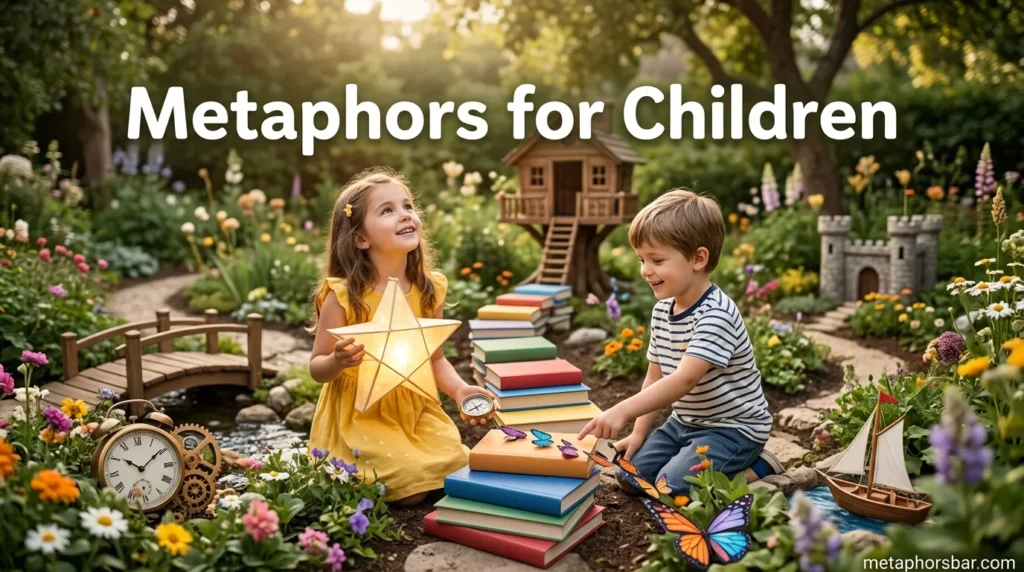
A child can change the whole atmosphere of a room without saying a word. A small laugh from the hallway. Tiny shoes lined neatly by the door. Crumbs on the table, a crayon under the sofa, a question that opens like a window no adult thought to look through. Children arrive in language the way sunlight arrives through curtains—sudden, soft, and full of shape. They are not only people in miniature; they are motion, curiosity, noise, tenderness, and surprise.
That is why metaphors for children are so useful. Childhood can be difficult to describe in plain language because it holds so many things at once: innocence, growth, mischief, imagination, vulnerability, energy, and change. A strong metaphor helps us say not only what children are like, but what they feel like to be around. It turns childhood into an image readers can see, hear, and remember.
Whether you are writing a poem, a story, a family tribute, a parenting essay, or a social media caption, metaphors for children can make your language more vivid, affectionate, and alive.
Why Metaphors for Children Matter in Writing and Everyday Language
They make childhood visible
Children grow and change quickly. A metaphor can capture the feeling of their presence before the moment passes.
They help show the kind of child you mean
Not every child feels the same in a sentence. Some are bright and active, some are quiet and thoughtful, some are wild and imaginative. The metaphor you choose can reveal that tone.
They make writing more memorable
A sentence like “the child was energetic” tells us something. A sentence like “the child was a spark running through the house” leaves an image behind.
They can carry warmth and wonder
Metaphors for children often bring out the joy, curiosity, and tenderness that people feel around them.
Three Powerful Metaphors for Children
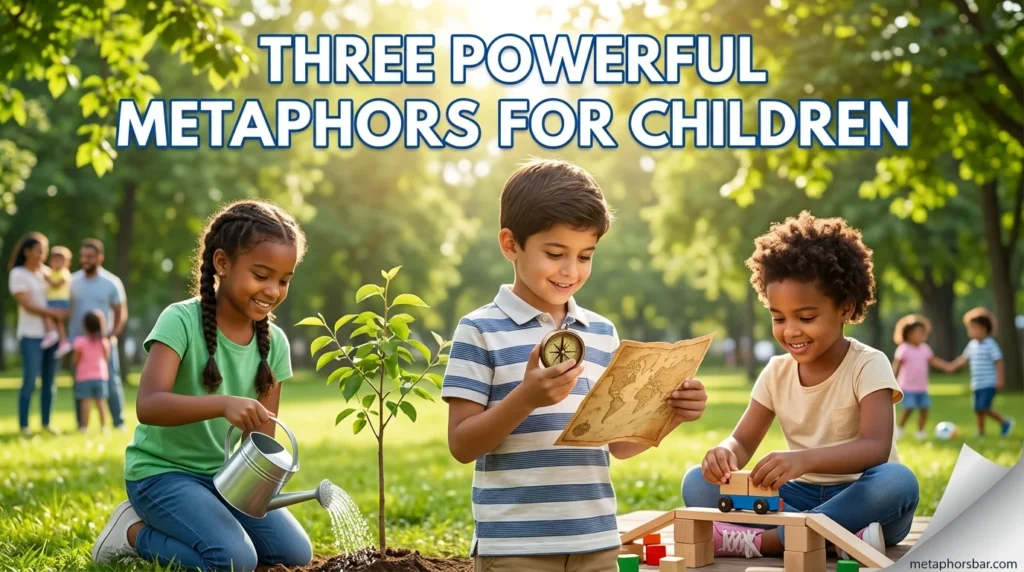
1. Children as Seeds
Seeds are small, quiet, and full of hidden potential. As a metaphor for children, seeds suggest growth, possibility, patience, and the sense that something beautiful is already taking shape beneath the surface. This metaphor is especially useful when you want to emphasize development rather than finished form.
Meaning and explanation
When children are compared to seeds, the image suggests that they are still becoming. A seed contains a future tree, flower, or harvest, even if it looks tiny today. In the same way, children are filled with possibility, but they need time, care, and the right conditions to grow. This metaphor is especially powerful when writing about learning, nurturing, or the early stages of life.
It also reminds us that growth happens quietly. A seed does not become a tree overnight. Children, too, grow in hidden ways before the change becomes visible.
Example sentence or scenario
Each child in the classroom felt like a seed waiting for the right season—full of promise, even if the shape of that promise was not yet clear.
This metaphor works beautifully in essays, educational writing, parenting reflections, and poems about development and hope.
Alternative ways to express it
- buds of possibility
- young shoots of life
- future trees in tiny form
- a garden beginning to grow
- little harvests in progress
Sensory and emotional details
You can imagine damp soil, a warm sun, and the tiny pressure of something beginning to unfold underground. Emotionally, this metaphor feels hopeful, patient, and tender. It suggests that children are not empty vessels—they are beginnings already in motion.
Mini storytelling touch
A teacher once told a parent, “Your son is a seed that just needs the right light.” That line stayed because it made growth feel gentle rather than rushed. The seed metaphor works especially well when we remember that children often develop in ways adults cannot yet see.
Literary or cultural reference
Seeds have long symbolized life, potential, and renewal in literature and culture. As a metaphor for children, the seed feels timeless because it honors both fragility and future strength.
2. Children as Sparks
A spark is small, bright, and alive with energy. As a metaphor for children, a spark suggests curiosity, movement, liveliness, and the power to ignite imagination or change in the people around them. This metaphor works especially well when you want a child to feel vibrant, quick, and full of life.
Meaning and explanation
When children are compared to sparks, the emphasis is on energy and ignition. A spark is tiny but powerful—it can light a fire, start a reaction, or brighten a dark space. In the same way, children often bring motion and excitement wherever they go. They ask questions, make discoveries, and often inspire adults to see the world differently. This metaphor is especially effective when describing lively, mischievous, inventive, or passionate children.
It also carries the sense of unpredictability. Sparks move fast and do not stay still, which makes them a fitting image for childhood energy.
Example sentence or scenario
She moved through the house like a spark, leaving laughter, questions, and a trail of glittering chaos behind her.
This metaphor is ideal for stories, family writing, school reflections, and descriptions of animated, curious children.
Alternative ways to express it
- a flicker of light
- a small flame in motion
- a bright little flash
- a burst of living energy
- a glimmer that lights the room
Sensory and emotional details
You can imagine a brief flash of light, the quick crackle of fire, and the way one small spark can change the whole room’s temperature. Emotionally, this metaphor feels lively, warm, and exciting. It suggests that children often bring surprise and brilliance without even trying.
Mini storytelling touch
A father once said his daughter could “turn a boring Tuesday into a holiday just by asking the right question.” That is the beauty of the spark metaphor: children can ignite wonder in ordinary places. They make the air feel a little more electric.
Literary or cultural reference
Fire and light often symbolize life, creativity, and inspiration in literature. As a metaphor for children, the spark captures the way childhood can awaken joy, imagination, and movement in everyone nearby.
3. Children as Butterflies
A butterfly is delicate, colorful, and always becoming. As a metaphor for children, butterflies suggest transformation, grace, vulnerability, and the beauty of growth in motion. This metaphor is especially useful when you want to describe childhood as a time of change, unfolding, and quiet wonder.
Meaning and explanation
When children are compared to butterflies, the image suggests both fragility and becoming. A butterfly begins as something entirely different before opening its wings. In the same way, children are always changing—learning, growing, and moving toward new versions of themselves. This metaphor is especially effective when you want to highlight gentleness, sensitivity, or the beauty of watching a child develop over time.
The butterfly is also a symbol of freedom. Children often move through the world with a kind of open curiosity that feels light, unguarded, and wonderfully alive.
Example sentence or scenario
The children in the garden looked like butterflies in motion, flitting from flower to flower with bright attention and soft laughter.
This metaphor works beautifully in poetry, nature writing, childhood reflections, and gentle storytelling.
Alternative ways to express it
- wings of wonder
- little blooms in flight
- delicate movers of light
- young wings learning the air
- blossoms with motion
Sensory and emotional details
You can imagine a breeze moving through tall grass, bright colors flashing in the sun, and the soft lift of wings. Emotionally, this metaphor feels tender, graceful, and hopeful. It suggests that children are in a constant state of becoming, beautiful precisely because they are not finished.
Mini storytelling touch
An aunt once watched her niece run through a summer field and whispered, “She’s all wing and sunlight today.” That image captures why the butterfly metaphor is so powerful. Children often seem to hover between earth and sky—grounded enough to play, light enough to dream.
Literary or cultural reference
Butterflies often appear in stories and art as symbols of transformation and renewal. As a metaphor for children, the butterfly reflects the delicate wonder of growth and the quiet beauty of becoming.
How to Choose the Right Metaphor for Children
Use seed when you want to show growth and potential
Choose this metaphor when you want childhood to feel nurturing, patient, and full of promise.
Use spark when you want to show energy and brightness
This is the best choice when the child feels lively, curious, or full of quick-moving joy.
Use butterfly when you want to show beauty in becoming
Choose this image when you want childhood to feel gentle, changing, and graceful.
The best metaphor depends on what you want to emphasize about children. They can grow, ignite, and transform—and sometimes they do all three at once.
Interactive Exercises for Practicing Metaphors for Children
Exercise 1: Complete the sentence
Finish this prompt in three different ways:
“The child was like ______ because ______.”
Try one answer that feels gentle, one that feels lively, and one that feels poetic.
Example: The child was like a seed because she carried quiet possibilities that had not yet fully opened.
Exercise 2: Sensory mapping
Think of a child you know or a childhood memory. Write down:
- one sound
- one color
- one movement
- one feeling
- one object or place
Then turn those details into a metaphor.
For example: The child sounded like laughter in a hallway, looked like sunlight on the floor, moved like a spark through the room, felt like hope, and reminded me of a garden beginning to bloom.
Exercise 3: Story starter
Begin a short paragraph with:
“The child felt like…”
Let the image guide the tone. You can make it playful, reflective, lyrical, or warm.
Exercise 4: Journal or caption prompt
Try writing a one-line reflection:
- “She was a seed of tomorrow.”
- “He was a spark in the middle of the room.”
- “The children in the garden moved like butterflies.”
Bonus Tips for Using Metaphors for Children in Writing, Social Media, and Daily Life
In writing
Use these metaphors in poems, essays, family stories, and educational writing to create warmth and emotional depth. They are especially powerful when you want to show childhood as a season of growth and wonder.
On social media
A short metaphor can make a family post, birthday caption, or memory note feel more memorable. “My child is a spark” or “They grow like seeds” can be simple yet moving.
In everyday conversation
Metaphors can help you describe children in a way that feels affectionate and vivid. Instead of saying “She is full of energy,” you might say, “She’s a spark today.”
In storytelling
If you are writing a character or a real-life memory, the metaphor can reveal whether the child feels hopeful, lively, or quietly transformative. That adds tenderness and depth.
Keep the image truthful
The strongest metaphor is the one that truly fits the child or moment. Some children feel like seeds, some like sparks, some like butterflies, and some are all three in different ways.
FAQs
1. What is a metaphor for children?
A metaphor for children is a figurative comparison that describes children using another image, such as seeds, sparks, or butterflies.
2. Why are metaphors for children useful?
They help make childhood feel more vivid, emotional, and memorable in writing or speech.
3. What is a simple metaphor for children?
A simple example is: Children are seeds. It suggests growth, potential, and care.
4. Can these metaphors be used in poetry or stories?
Yes. They are especially effective in poetry and stories because they capture both personality and emotion.
5. How do I create my own metaphor for children?
Think about what children feel like—growing, bright, playful, delicate, or curious—and compare that to something with similar qualities.
6. Are these metaphors only for young children?
No. They can also describe childhood more broadly or a childlike sense of wonder in older children and adults.
7. What makes a strong metaphor for children?
A strong metaphor is vivid, emotionally fitting, and easy to imagine. It should help the reader feel the child, not just label them.
Conclusion
Children are some of the most vivid and changeable parts of human life. They grow, brighten, transform, and surprise us in ways that are often difficult to put into words. That is why metaphors matter—they help us describe not only what children are, but what childhood feels like.
A seed gives children their promise and potential. A spark gives them their energy and light. A butterfly gives them their beauty in becoming. Together, these images remind us that children are not just small people—they are beginnings, flashes, and transformations all at once.
So when you write about children, do not settle for the obvious. Let them grow, glow, or fly through your language. A good metaphor can make childhood unforgettable.