
The first bite of chocolate can feel like a small event. The wrapper crackles, the square breaks with a neat snap, and then the flavor begins to melt—slowly, richly, almost like a secret being told in the dark. Chocolate is not just something sweet to taste. It can feel like comfort, celebration, luxury, memory, or even a little mischief. It has a way of turning an ordinary moment into something softer and more memorable.
That is why metaphors for chocolate are so useful. Chocolate is one of those images that naturally invites comparison because it carries so much emotional weight. It can symbolize pleasure, reward, warmth, temptation, romance, or joy. A strong metaphor helps us describe not only what chocolate tastes like, but what it feels like to experience it.
Whether you are writing poetry, a food blog, a product description, a social media caption, or a personal reflection, metaphors for chocolate can make your language richer, warmer, and more vivid.
Why Metaphors for Chocolate Matter in Writing and Everyday Language
They turn taste into emotion
Chocolate is a sensory experience, but metaphor lets you expand it into something emotional and memorable.
They make descriptions more vivid
Instead of saying chocolate is delicious, you can compare it to comfort, velvet, treasure, or a warm embrace.
They help set mood
Chocolate can feel cozy, decadent, playful, romantic, or nostalgic. The right metaphor helps you choose the tone.
They work across many kinds of writing
Food writing, branding, storytelling, poetry, and everyday captions all benefit from chocolate metaphors.
Three Powerful Metaphors for Chocolate
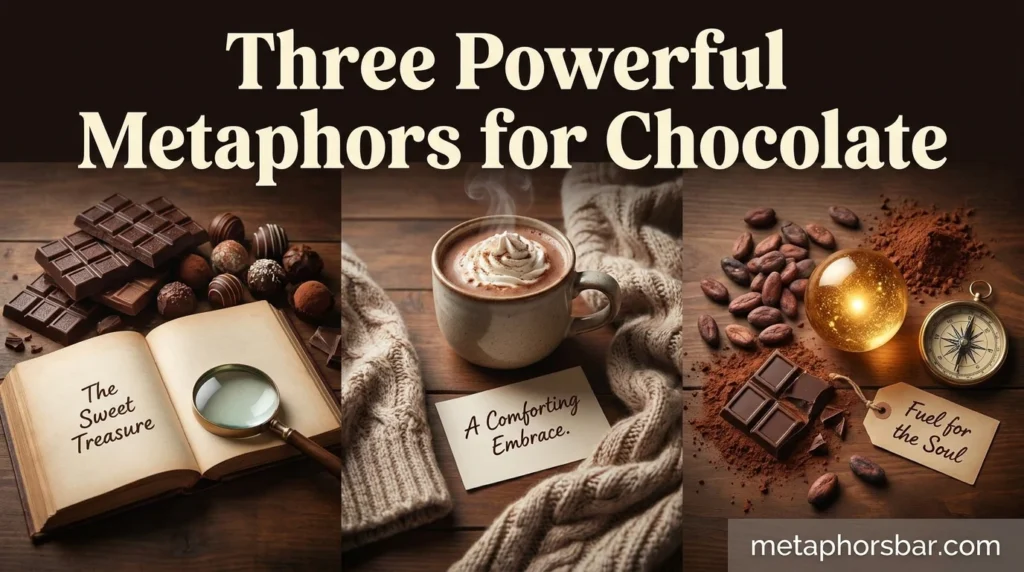
1. Chocolate as a Warm Blanket
One of the most comforting metaphors for chocolate is a warm blanket. This image suggests coziness, softness, and the kind of pleasure that feels restorative rather than flashy. It works especially well when chocolate is tied to rest, comfort, or emotional warmth.
Meaning and explanation
When chocolate is compared to a warm blanket, it suggests shelter and comfort. A blanket wraps around you and makes you feel safe from cold. In the same way, chocolate can feel like a small refuge after a difficult day. This metaphor is especially useful when you want chocolate to feel soothing, familiar, and nurturing.
It also captures the sense that chocolate often arrives at just the right time—after stress, after bad weather, after a long week, or during a quiet evening when you need something gentle. The metaphor works because chocolate is not just sweet; it can be emotionally grounding.
Example sentence or scenario
On a rainy evening, the hot chocolate felt like a warm blanket wrapped around her thoughts, easing the edges of the whole day.
This metaphor works beautifully in food writing, memoirs, cozy lifestyle captions, and descriptions of comfort.
Alternative ways to express it
- a blanket of sweetness
- a wrap of comfort
- a soft layer of warmth
- a cozy cocoa hug
- a quilt of flavor
Sensory and emotional details
You can imagine the steam rising from a mug, the softness of fleece on skin, and the quiet relief of sitting down after being out in the cold. Emotionally, this metaphor feels gentle, restful, and safe. It suggests that chocolate can function like a small emotional shelter.
Mini storytelling touch
A woman once said that when her grandmother brought out cocoa on winter nights, it felt like “the house had put on a sweater.” That is the power of this metaphor: chocolate can make a space and a mood feel wrapped, softened, and cared for.
Literary or cultural reference
Comfort food often appears in literature and film as a symbol of care and belonging. Chocolate fits naturally into that tradition because it is so often associated with home, warmth, and emotional reassurance.
2. Chocolate as a Treasure Chest
Chocolate can also be imagined as a treasure chest because each piece feels like a little reward waiting to be discovered. This metaphor works especially well when chocolate is luxurious, special, or full of delightful surprises. It emphasizes value, richness, and the pleasure of uncovering something beautiful.
Meaning and explanation
When chocolate is compared to a treasure chest, it suggests rarity and delight. A treasure chest holds something precious, and eating chocolate can feel like uncovering one small treasure after another—whether it is the smooth filling inside a truffle or the satisfying snap of a dark chocolate square. This metaphor is especially effective when chocolate feels indulgent, special, or carefully chosen.
It also works well in writing about gift boxes, chocolate assortments, and premium desserts, where the experience is not just consumption but discovery.
Example sentence or scenario
The box of assorted chocolates was a treasure chest of flavors, each piece hiding a different surprise beneath its glossy surface.
This metaphor is ideal for product descriptions, gift writing, luxury branding, and food essays.
Alternative ways to express it
- a box of edible jewels
- a chest of sweetness
- a little vault of delight
- a collection of hidden riches
- a trove of cocoa treasures
Sensory and emotional details
You can imagine the shine of foil wrappers, the rich smell of cocoa, and the suspense of choosing which piece to try first. Emotionally, this metaphor feels exciting, abundant, and slightly ceremonial. It suggests that chocolate is not just eaten—it is revealed.
Mini storytelling touch
A child once received a Valentine’s Day box of chocolates and opened it as carefully as if it contained ancient gold. Every piece felt like a secret reward. That is exactly why the treasure chest metaphor works so well: chocolate can turn anticipation into delight.
Literary or cultural reference
Treasure chest imagery appears often in fairy tales and adventure stories, where discovery is part of the joy. As a metaphor for chocolate, it adds a sense of wonder and reward to the experience.
3. Chocolate as Velvet or Silk
Chocolate can also be described as velvet or silk because of its smooth texture, richness, and elegance. This metaphor is especially useful when chocolate is luxurious, refined, and soft on the tongue. It works beautifully for desserts, truffles, ganache, and other chocolate treats that feel indulgent and smooth.
Meaning and explanation
When chocolate is compared to velvet or silk, the image emphasizes texture and elegance. Velvet is soft, rich, and deep in color. Silk is smooth, delicate, and graceful. Chocolate often feels the same—especially when it melts slowly or has a creamy finish. This metaphor is especially effective when you want to make chocolate feel sophisticated, tactile, and decadent.
It is a strong image because it appeals to touch as much as taste. Chocolate is not just something you eat; it is something that seems to glide, melt, and linger.
Example sentence or scenario
The dessert was pure silk on the tongue, a velvet smoothness of chocolate that melted into warmth and sweetness.
This metaphor is especially effective in food writing, dessert menus, romance writing, and elegant product descriptions.
Alternative ways to express it
- a velvet ribbon of flavor
- a silky layer of cocoa
- a smooth tapestry of sweetness
- a satin finish of chocolate
- a rich texture of indulgence
Sensory and emotional details
You can imagine the smooth slide of a truffle, the glossy shine of ganache, and the slow melt of chocolate on the tongue. Emotionally, this metaphor feels elegant, sensual, and indulgent. It suggests that chocolate can be refined without losing its comfort.
Mini storytelling touch
A pastry chef once described her dark chocolate mousse as “the kind of velvet you could taste.” That line is memorable because it brings the texture of chocolate into the world of fabric and touch. Velvet and silk make chocolate feel not just sweet, but luxurious.
Literary or cultural reference
Velvet and silk often symbolize richness, elegance, and softness in literature and design. As a metaphor for chocolate, they give the flavor a refined and almost poetic quality.
How to Choose the Right Metaphor for Chocolate
Use warm blanket when chocolate feels comforting
Choose this metaphor when the experience is cozy, soothing, and emotionally warm.
Use treasure chest when chocolate feels exciting or special
This is the best choice when the chocolate feels like a gift, surprise, or hidden delight.
Use velvet or silk when chocolate feels smooth and luxurious
Choose this image when you want to emphasize elegance, richness, and texture.
The best metaphor depends on the kind of chocolate you want to describe. Chocolate can comfort, surprise, and dazzle—and sometimes it does all three.
Interactive Exercises for Practicing Metaphors for Chocolate
Exercise 1: Complete the sentence
Finish this prompt in three different ways:
“Chocolate is like ______ because ______.”
Try one answer that feels comforting, one that feels luxurious, and one that feels playful.
Example: Chocolate is like a warm blanket because it makes a hard day feel softer and more bearable.
Exercise 2: Sensory mapping
Think of a chocolate memory. Write down:
- one smell
- one texture
- one color
- one sound
- one feeling
Then turn those details into a metaphor.
For example: Chocolate smelled like rain on warm pavement, felt like velvet on the tongue, looked like polished wood, sounded like a crisp snap, and carried the feeling of comfort.
Exercise 3: Story starter
Begin a short paragraph with:
“The chocolate tasted like…”
Let the image guide the tone. You can make it cozy, elegant, nostalgic, or playful.
Exercise 4: Social media or journal prompt
Try writing a one-line reflection:
- “Chocolate was my warm blanket today.”
- “That box of truffles felt like a treasure chest.”
- “The mousse was velvet on the tongue.”
Bonus Tips for Using Metaphors for Chocolate in Writing, Social Media, and Daily Life
In writing
Use chocolate metaphors in poetry, food essays, memoirs, and lifestyle writing to create warmth and atmosphere. They are especially effective when you want to evoke pleasure or comfort.
On social media
A short metaphor can make a caption more memorable. “Chocolate was a treasure chest today” or “This dessert is velvet” can feel playful and polished.
In everyday conversation
Metaphors can help you describe chocolate with more personality. Instead of saying “This is delicious,” you might say, “This tastes like a warm blanket.”
In product descriptions
Chocolate brands and dessert menus can use metaphors to make their offerings feel luxurious, comforting, or memorable without sounding overly technical.
Keep the image true to the chocolate
The strongest metaphor is the one that fits the actual experience. Some chocolates are cozy, some are decadent, some are full of surprise. Let the image match the flavor and feeling.
FAQs
1. What is a metaphor for chocolate?
A metaphor for chocolate is a figurative comparison that describes chocolate using another image, such as a warm blanket, treasure chest, or velvet.
2. Why are metaphors for chocolate useful?
They help make the taste and feeling of chocolate more vivid, emotional, and memorable in writing or speech.
3. What is a simple metaphor for chocolate?
A simple example is: Chocolate is like a warm blanket. It suggests comfort, warmth, and coziness.
4. Can chocolate metaphors be used in food writing?
Yes. They are especially effective in food writing because they make flavor and texture feel more alive.
5. How do I create my own chocolate metaphor?
Think about what chocolate feels like—smooth, rich, cozy, surprising, or luxurious—and compare it to something with similar qualities.
6. Are these metaphors only for desserts or sweets?
Mostly, yes, but they can also be used in romantic writing, lifestyle captions, or any context where sweetness and comfort matter.
7. What makes a strong metaphor for chocolate?
A strong metaphor is vivid, emotionally fitting, and easy to imagine. It should help the reader feel the chocolate, not just name it.
Conclusion
Chocolate is more than a flavor. It is comfort, reward, elegance, and delight all wrapped into one rich experience. That is why metaphors matter—they help us describe not only what chocolate tastes like, but what it means to us.
A warm blanket gives chocolate its comfort. A treasure chest gives it surprise and value. Velvet or silk gives it elegance and smoothness. Together, these images remind us that chocolate is never just chocolate—it can be a feeling, a memory, or a small luxurious escape.
So when you write about chocolate, do not settle for the obvious. Let it warm, surprise, or glide through your language. A good metaphor can make chocolate unforgettable.