

The mind has its own weather. Some mornings, it wakes clear and blue, full of light and possibility. Other days, it feels fogged in before breakfast, with thoughts moving like distant thunder across a heavy sky. A person can look calm on the outside while carrying an entire season inside. That is part of what makes mental health so difficult to describe—and so important to express with care.
Metaphors for mental health give shape to feelings that are often invisible. They help us talk about anxiety, healing, resilience, overwhelm, rest, and growth in ways that feel human and relatable. Instead of reducing emotional life to labels or numbers, metaphors turn it into something we can picture: a garden, a storm, a room, a river, a bridge, a lantern, a backpack. The right image can make a private struggle feel less lonely and a quiet victory feel more real.
Whether you are writing a poem, crafting a personal essay, posting a thoughtful caption, journaling through a difficult season, or simply trying to find language for what you feel, metaphors for mental health can help you speak with honesty, softness, and depth.
Why Metaphors for Mental Health Matter in Writing and Everyday Life

They Help Describe the Invisible
Mental health is often experienced internally before it is ever seen externally. That makes it hard to explain. A metaphor gives the experience a shape. “My mind feels cluttered” is understandable, but “my mind feels like a room with every drawer left open” creates a stronger emotional picture.
They Make Difficult Feelings Easier to Share
Talking about mental health can be vulnerable. A metaphor can sometimes make that vulnerability feel safer. It lets you say something true without having to explain every detail all at once. That can be especially helpful in journaling, therapy conversations, poetry, or messages to trusted friends.
They Add Compassion to Language
A good metaphor does not judge the person experiencing the feeling. It gives the feeling dignity. Instead of making a struggle sound broken or shameful, it can present it as weather, growth, or fatigue—things that change, pass, and can be worked with gently.
Three Powerful Metaphors for Mental Health
1. Mental Health as Weather
Meaning and Explanation
Weather is one of the most natural metaphors for mental health because it changes constantly. A clear sky can represent calm, hope, or emotional stability. A storm can symbolize overwhelm, panic, grief, or stress. Fog can suggest confusion, numbness, or uncertainty. Weather is useful because it reminds us that emotional states are not fixed; they move, shift, and eventually pass.
This metaphor is especially helpful when describing anxiety, depression, emotional highs and lows, or the general unpredictability of the inner world.
Example Sentence or Scenario
Some days her mental health felt like a bright morning; other days it rolled in like thick fog, making even simple thoughts hard to see.
This could describe someone who appears fine on the outside but is navigating internal shifts no one else can see. It works well in reflective writing because it creates both motion and atmosphere.
Alternative Ways to Express It
- my mind is under cloudy skies
- emotions moving like a passing storm
- a season of inner rain
- thoughts hidden in fog
- calm weather returning after turbulence
Sensory or Emotional Details
You can almost hear rain tapping on a window, feel pressure in the air, or see clouds moving slowly across the sky. Emotionally, this metaphor feels honest and gentle. It says: this state is real, but it is not permanent.
Mini Storytelling Touch
A teacher once noticed that one of her students was unusually quiet after being lively all semester. When she asked how he was doing, he said, “I feel like I’ve been living in fog for a week.” That sentence told her more than a long explanation could have. Not dramatic, not exaggerated—just true. Weather metaphors often work that way: they make internal life visible without forcing it into neat categories.
Literary or Cultural Reference
Weather has long been used in literature to reflect mood and emotional upheaval. Storms in novels, fog in poems, and sunsets in songs all remind us that the sky often mirrors the heart.
2. Mental Health as a Garden
Meaning and Explanation
A garden is a powerful metaphor for mental health because it captures growth, care, patience, and seasonal change. Healthy gardens need attention: water, sunlight, pruning, rest, and time. Mental well-being often works the same way. Some days involve blooming; other days involve tending, clearing weeds, or simply waiting for things to settle.
This metaphor is especially useful for describing healing, therapy, self-care, habits, and long-term emotional growth.
Example Sentence or Scenario
Her mental health was like a garden that had been neglected for too long—still alive, but needing gentle care, sunlight, and patience to bloom again.
This metaphor can describe a person rebuilding after burnout, grief, or prolonged stress. It acknowledges that healing is not instant. It grows.
Alternative Ways to Express It
- watering the roots of the self
- planting calmer thoughts
- clearing the weeds of stress
- a mind growing in season
- healing like spring after winter
Sensory or Emotional Details
You can imagine soil, rain, green shoots, the smell of earth, and the quiet miracle of something slowly opening into life. Emotionally, this metaphor feels hopeful and restorative. It reminds us that not every day needs to be a bloom; sometimes the work is simply tending.
Mini Storytelling Touch
A woman recovering from burnout once started keeping a small plant on her windowsill. At first, she barely had the energy to water it. But each time she did, she felt a little less disconnected from herself. Later she said the plant helped her understand her own mind: “I was not failing. I was something that needed care.” That is the heart of the garden metaphor. It turns self-maintenance into something natural rather than selfish.
Real-Life Example
People often describe therapy, journaling, and rest as “tools” for growth, but a garden metaphor adds a softer truth: progress is living work. It takes time, and it cannot be rushed.
3. Mental Health as a House or Room
Meaning and Explanation
A house metaphor is especially effective because it suggests inner structure, safety, clutter, and repair. The mind can feel like a house with different rooms: a bright kitchen of daily routine, a quiet attic of memory, a locked basement of old pain, a crowded hallway of worries. This image helps describe how different parts of the self can hold different emotions.
This metaphor is useful when talking about boundaries, privacy, trauma, inner organization, or the need to “clean out” what no longer serves us.
Example Sentence or Scenario
His mental health felt like a house after years of weather and wear—some rooms open and bright, others closed off and in need of repair.
This could describe someone who is functioning in some parts of life while struggling in others. It can also suggest that healing is not about being perfect everywhere, but about tending the spaces one room at a time.
Alternative Ways to Express It
- a room full of noise
- a house needing care
- rearranging the inner shelves
- the architecture of the self
- opening windows in a crowded mind
Sensory or Emotional Details
You can hear footsteps in an empty hallway, feel dust in an unused room, or notice light falling across an old floorboard. Emotionally, this metaphor can feel intimate and layered. It suggests history, memory, and the possibility of repair.
Mini Storytelling Touch
An architect once said that people often think healing means building a brand-new house, but sometimes it means restoring the one you already have. That idea stayed with a man who had spent years trying to “start over” after a breakdown. The house metaphor helped him see that he was not erased. He was still there, and some rooms simply needed attention.
Cultural Reference
Homes in literature often symbolize identity, family, memory, and emotional state. When the house feels unstable, the person inside often does too. That is what makes this metaphor so enduring.
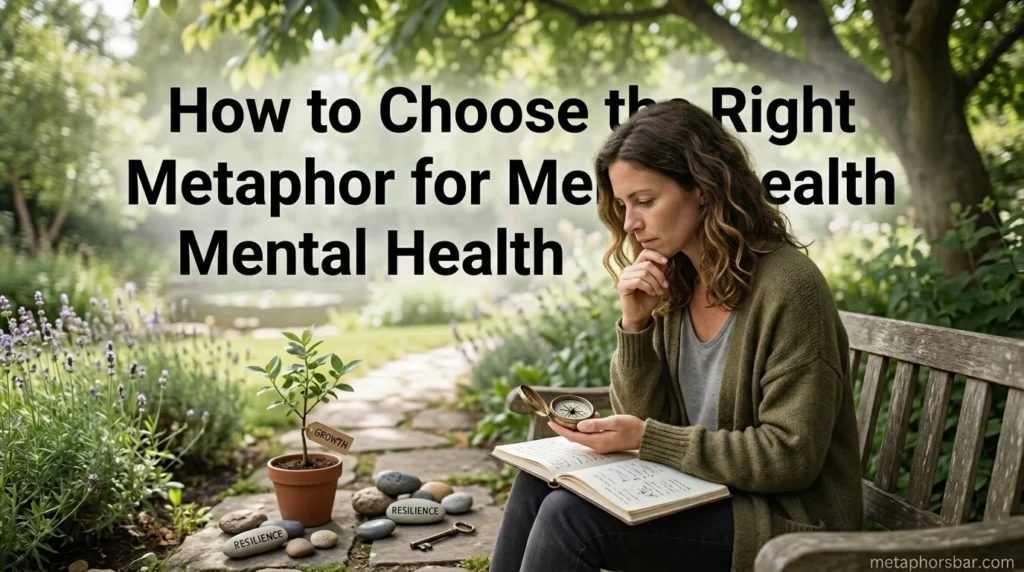
How to Choose the Right Metaphor for Mental Health
Use Weather When Feelings Are Changing or Overwhelming
Weather metaphors are best when you want to show mood shifts, anxiety, depression, calm, or emotional turbulence. They are especially effective for writing about temporary states that move in and out.
Use a Garden When You Want to Show Growth and Healing
Choose the garden when your focus is care, patience, recovery, or the slow unfolding of better habits and self-understanding.
Use a House or Room When You Want to Show Inner Structure
A house metaphor works well when you want to describe memory, boundaries, emotional clutter, or the process of repairing what is inside.
The best metaphor depends on the tone you want. Sometimes mental health feels like the sky. Sometimes it feels like soil, Sometimes it feels like a room you are learning to live in again.
Interactive Exercises to Practice Mental Health Metaphors
Exercise 1: Finish the Sentence
Write three versions of this prompt:
“My mental health feels like ______ because ______.”
Try one with weather, one with a garden, and one with a house.
Example: “My mental health feels like a window during a storm because I can hear everything, but I need time before I can open it.”
Exercise 2: Sensory Mapping
Think of your current emotional state and list:
- one sound
- one color
- one texture
- one place
- one season
Then turn those into a metaphor.
Example: The mind sounded like wind in the trees, looked like gray morning light, felt like rough wool, resembled a half-open room, and moved like late autumn.
Exercise 3: Story Starter
Begin a short paragraph with:
“My mind was like…”
Let the metaphor unfold naturally. Do not force positivity. Just be honest about the image that fits.
Exercise 4: Gentle Caption Practice
Write a one-line reflection that uses a metaphor for mental health.
Examples:
- “Some days my mind is weather, not a machine.”
- “Healing is a garden, not a race.”
- “I am learning the rooms of myself.”
Bonus Tips for Using Mental Health Metaphors in Writing, Social Media, and Daily Life
In Writing
Use these metaphors in essays, poems, memoirs, and fiction to add emotional depth without oversimplifying difficult experiences. Let the image carry part of the truth.
In Social Media
If you share thoughtfully about mental health online, a metaphor can express your experience with beauty and care. A line like “Today feels like fog, but the fog moves” can be more resonant than a direct statement alone.
In Journaling
Metaphors can help you write about emotions that feel too big, too tangled, or too private for plain language. They create a little distance, which can make honesty easier.
In Conversations
When talking with someone you trust, a metaphor can explain your internal state in a way that feels human and less clinical. It can open the door to understanding.
Keep It Kind
Avoid metaphors that shame, blame, or romanticize suffering. The goal is not to make pain prettier than it is. The goal is to give it language that is truthful and compassionate.
FAQs
1. What is a metaphor for mental health?
A metaphor for mental health is a figurative comparison that describes emotional well-being, struggle, healing, or inner balance through an image such as weather, a garden, or a house.
2. Why are metaphors for mental health useful?
They help express invisible feelings in a way that is vivid, relatable, and easier to understand.
3. Can metaphors for mental health be used in therapy or journaling?
Yes. They can help people describe their inner world more clearly and gently, especially when direct language feels too hard.
4. What is a simple metaphor for mental health?
A simple example is: Mental health is weather. It clearly suggests changing conditions and emotional movement.
5. How do I create my own mental health metaphor?
Think about how your inner experience feels physically or emotionally, then compare it to something with similar qualities, movement, or mood.
6. Are these metaphors only for creative writing?
No. They can also be used in essays, reflective posts, conversations, speeches, and personal journaling.
7. What makes a strong mental health metaphor?
A strong metaphor is emotionally honest, vivid, and respectful. It should help the reader understand the experience without flattening it.
Conclusion
Mental health is deeply personal, but it is also widely human. We all have seasons of clarity and fog, gardens that need tending, and rooms inside us that hold memory, worry, and hope. Metaphors help us speak about those experiences with care.
A storm reminds us that change is real but temporary. A garden reminds us that growth needs attention. A house reminds us that healing can mean repairing what already belongs to us. Together, these images give emotional life shape, dignity, and room to breathe.
So when words feel too small for what is happening inside, reach for a metaphor. Let it be soft, honest, and alive. Sometimes the right image does not fix everything—but it can make the path forward a little clearer, and a little less lonely.