
The first thing anyone noticed was the red umbrella.
In the middle of the gray, rain-soaked street, it glowed like a living flame moving through the fog. Cars splashed through puddles, strangers hurried past in dark coats, yet that single burst of crimson held the entire scene together. Red has always done that. It demands attention. It pulses with emotion, It can symbolize love, danger, anger, courage, celebration, or desire—all at once.
That emotional intensity is exactly why metaphors for red are so powerful in writing and everyday language. Red is never just a color. It becomes fire in the bloodstream, roses in bloom, warning lights in the dark, sunsets spilling across the sky, and hearts beating faster in moments of passion or fear.
Writers, poets, speakers, and storytellers use red metaphors because they instantly create vivid imagery and emotional energy. Whether you are crafting poetry, fiction, captions, speeches, or journal entries, learning how to use metaphors for red can make your language feel alive and unforgettable.
Metaphors for Red: Why Red Imagery Is So Emotionally Powerful
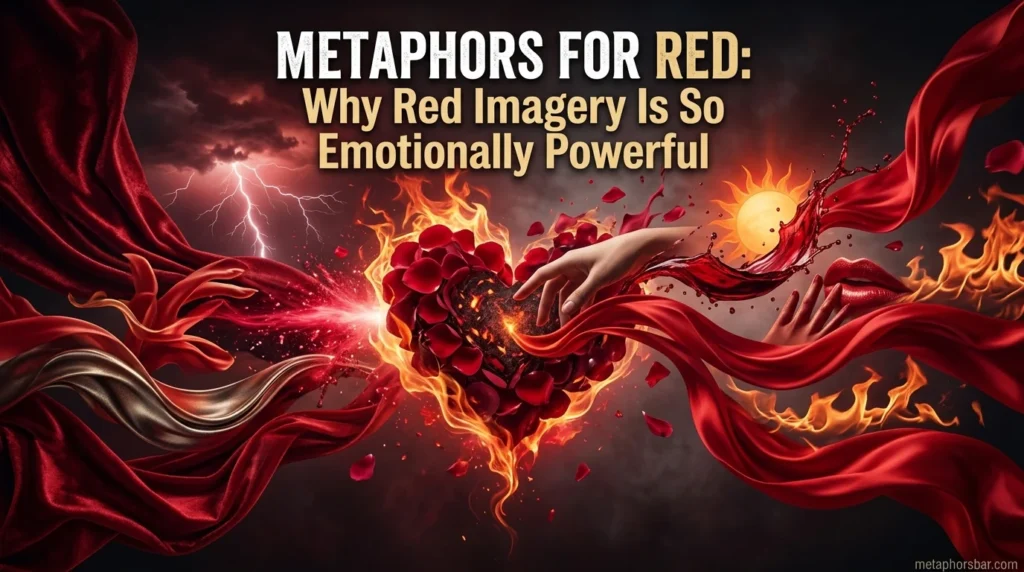
The symbolism behind the color red
Across cultures and literature, red often symbolizes:
- passion
- love
- anger
- danger
- courage
- celebration
- vitality
- transformation
Because red carries such strong emotional associations, it becomes an incredibly flexible metaphorical tool.
A red sunset may symbolize romance. Red flames may symbolize rage or energy. Red roses may symbolize affection and beauty. The meaning changes depending on context.
Why readers instantly react to red metaphors
Red naturally grabs human attention. It is connected to blood, heat, fire, and urgency, so the brain responds emotionally to it very quickly.
Compare:
- “Her dress was red.”
- “Her dress blazed like a living ember in the candlelight.”
The second image feels warmer, more dramatic, and emotionally vivid.
3 Powerful Metaphors for Red With Meanings and Examples
1. Red is a flame dancing in the dark
Meaning and explanation
This metaphor compares red to fire, emphasizing intensity, warmth, energy, and visibility. It works beautifully for passion, confidence, creativity, or emotional excitement.
Fire imagery also suggests movement and unpredictability.
Example sentence or scenario
“Her laughter flashed through the quiet room like a flame dancing in the dark.”
Alternative ways to express it
- red burned like wildfire
- crimson flickered like candlelight
- scarlet blazed against the night
- the color glowed like embers
Sensory or emotional details
Readers may imagine heat against the skin, crackling flames, glowing sparks, or flickering light in darkness.
Mini storytelling touch
At a winter festival, lanterns lined the streets while dancers spun in flowing red fabric. One elderly woman watching whispered, “They look like flames teaching the night how to move.”
2. Red is the heartbeat of emotion
Meaning and explanation
This metaphor connects red with blood, pulse, and emotional intensity. It symbolizes love, excitement, anger, fear, or deep human feeling.
Because red is tied physically to the heart and blood, this metaphor feels intimate and powerful.
Example sentence or scenario
“The painting pulsed with red like the heartbeat of grief itself.”
Alternative ways to express it
- red throbbed like a pulse
- crimson carried the rhythm of emotion
- scarlet flowed like living blood
- passion beat beneath the color
Sensory or emotional details
This metaphor creates feelings of urgency, closeness, warmth, and emotional vulnerability.
Literary or cultural reference
In literature and film, red frequently symbolizes both love and danger because the human heart itself represents both life and emotional risk.
3. Red is a warning siren painted in color
Meaning and explanation
This metaphor highlights red as a symbol of alertness, danger, or intensity. Red naturally signals caution because it stands out visually and emotionally.
It works well in dramatic writing or emotional storytelling.
Example sentence or scenario
“The anger in his voice spread across the room like a warning siren painted in color.”
Alternative ways to express it
- red flashed like alarm lights
- scarlet screamed for attention
- crimson warned like storm clouds
- the color blazed with urgency
Sensory or emotional details
Readers may imagine flashing lights, loud alarms, heat, tension, or rapid movement.
Real-life example
Traffic signs, stoplights, and emergency signals often use red because it naturally commands attention and signals importance or danger.
Creative Ways to Use Metaphors for Red in Writing
In poetry and descriptive writing
Red metaphors create emotional drama and vivid imagery.
Examples:
- “The sunset bled across the horizon.”
- “Her lips bloomed like winter roses.”
- “Anger sparked behind his eyes like wildfire.”
These images feel cinematic and emotionally layered.
In storytelling and fiction
Red imagery can shape atmosphere, mood, or character emotions.
Examples:
- “The red scarf moved through the crowd like a streak of flame.”
- “His rage simmered beneath the surface like glowing lava.”
- “The ballroom shimmered in crimson light.”
These details make scenes feel visually alive.
In social media captions
Red metaphors work beautifully for bold, emotional, or aesthetic captions.
Examples:
- “Paint the night crimson.”
- “A little fire in human form.”
- “Blooming boldly.”
These captions feel stylish, poetic, and memorable.
Interactive Exercises for Practicing Red Metaphors
Exercise 1: Match red with an emotion
Choose one:
- love
- anger
- courage
- excitement
- danger
Now describe that emotion using red imagery.
Example: “Excitement rushed through her like wildfire beneath the skin.”
Exercise 2: Rewrite plain descriptions creatively
Take simple sentences like:
- “The flowers were red.”
- “He felt angry.”
- “The sunset looked beautiful.”
Rewrite them metaphorically:
- “The flowers burned like tiny flames in the garden.”
- “Anger boiled inside him like molten crimson.”
- “The sunset spilled red silk across the sky.”
Exercise 3: Build a sensory red scene
Imagine:
- a red carnival
- autumn leaves
- a glowing city sign
- a red dress at a party
Describe:
- sight
- sound
- emotion
- movement
- atmosphere
This strengthens vivid writing skills.
Bonus Tips for Using Metaphors for Red Effectively
Match red imagery to the mood
Different red metaphors create different emotional effects:
- soft red → romance or warmth
- fiery red → passion or anger
- dark crimson → mystery or danger
- bright scarlet → excitement or boldness
Use contrast for stronger imagery
Red stands out most against:
- snow
- darkness
- gray skies
- black clothing
- pale surroundings
Contrast makes red imagery more dramatic.
Avoid repetitive clichés
Instead of always using:
- “red as a rose”
- “seeing red”
Try more original imagery:
- “red flickered through the room like restless firelight.”
- “the scarf glowed like a captured sunset.”
Add movement and texture
Red often feels alive when paired with motion:
- blazing
- glowing
- flickering
- spilling
- burning
- pulsing
Movement adds emotional energy.
More Metaphors for Red You Can Use
Red is bottled lightning
Perfect for describing energy and intensity.
Red is velvet fire
A softer metaphor for romance or elegance.
Red is thunder wrapped in silk
This combines beauty with power and danger.
Red is the voice of passion
Useful for emotional or romantic writing.
Red is a sunset caught in fabric
A poetic metaphor for clothing or visual imagery.
FAQs About Metaphors for Red
1. What is a metaphor for red?
A metaphor for red is a creative comparison that uses the color red to symbolize emotions, energy, passion, or danger.
2. Why are red metaphors so powerful?
Red naturally carries strong emotional and visual associations, making metaphors feel vivid and memorable.
3. What emotions does red symbolize?
Red often symbolizes:
- love
- passion
- anger
- courage
- danger
- excitement
4. Are red metaphors common in poetry?
Yes. Poets frequently use red imagery because it creates emotional intensity and strong visual symbolism.
5. Can red metaphors symbolize both love and danger?
Absolutely. Red often represents both attraction and warning at the same time.
6. How do I create original metaphors for red?
Focus on red’s qualities—heat, brightness, intensity, boldness—and compare them creatively to emotions or experiences.
7. Can red metaphors work in captions and everyday speech?
Yes. Red imagery works especially well in creative captions, storytelling, branding, and emotional writing.
Conclusion
Red is one of the most powerful colors in human imagination. It is the color of roses and warning lights, sunsets and flames, passion and fury. It can comfort, excite, seduce, or alarm within a single glance.
That is why metaphors for red remain so unforgettable. They transform simple color into emotional experience. A red dress becomes a flame. A sunset becomes spilled velvet. Anger becomes wildfire. Love becomes a heartbeat glowing beneath the skin.
Whether you are writing poetry, fiction, social captions, speeches, or personal reflections, red metaphors can bring energy, emotion, and vivid beauty into your language. After all, some feelings are too intense for ordinary words—and sometimes only red can speak them fully.