
Winter arrives quietly in some places and fiercely in others. The air sharpens, the trees stand bare against pale skies, and the world feels slower, softer, and sometimes heavier. Writers have always turned to metaphors for winter and beautiful nature similes to capture this season’s stillness, mystery, and emotional depth.
Similes are an essential part of figurative language because they help us compare one thing to another using “like” or “as,” making descriptions clearer and more vivid. Just as trees symbolize strength, resilience, growth, wisdom, and human emotion through changing seasons, winter itself reflects powerful feelings—rest, endurance, loneliness, peace, and quiet transformation. When we use similes in literature and everyday writing, we turn cold air and falling snow into meaningful comparisons. These figurative language examples don’t just describe weather—they reveal human experience. Let’s explore how.
What Is a Simile?
A simile is a figure of speech that compares two different things using the words “like” or “as.”
It helps readers imagine something more clearly by linking it to something familiar.
Example: Winter is as silent as a sleeping forest.
This simile compares winter’s quietness to a forest at rest, helping readers feel the stillness instead of just reading about it.
Winter Is Like a Sleeping Giant
Meaning: Winter feels powerful yet still, as if immense strength lies beneath its calm surface.
Usage Insight: This simile works well in descriptive essays or dramatic storytelling when you want to show winter’s quiet power.
Examples:
- The valley lay silent, winter like a sleeping giant waiting to awaken.
- Beneath the frozen river, winter rested like a giant holding its breath.
Winter Is Like a White Blanket Covering the Earth
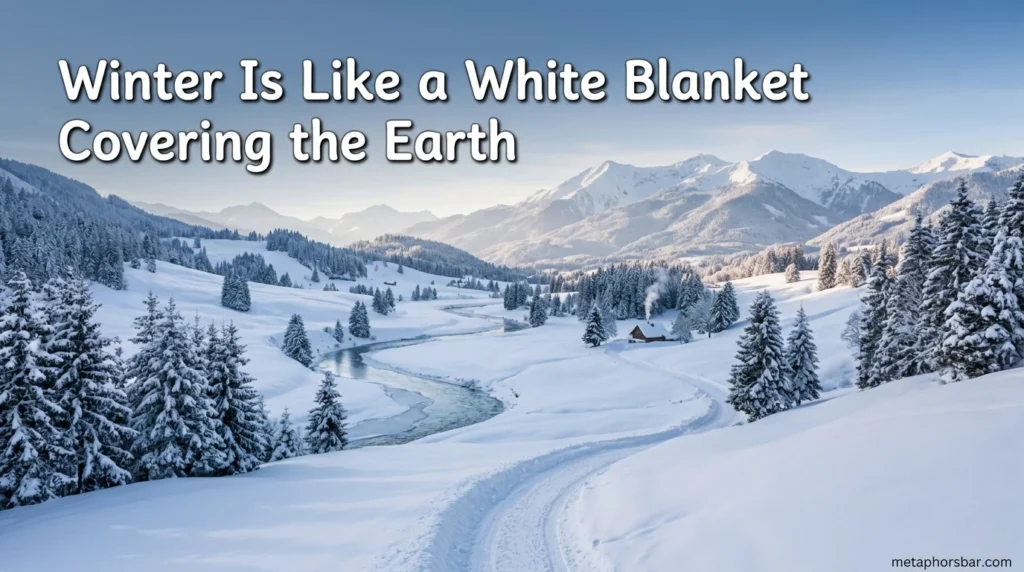
Meaning: Snow gently covers everything, creating softness and protection.
Usage Insight: Ideal for peaceful scenes or cozy imagery in poems and stories.
Examples:
- By morning, winter had wrapped the fields like a white blanket.
- The rooftops shimmered under winter, soft as a blanket pulled tight.
Winter Is As Cold As a Stone Heart
Meaning: Emphasizes emotional or physical coldness.
Usage Insight: Works well in emotional writing or dramatic comparisons.
Examples:
- The wind was as cold as a stone heart on that lonely night.
- Her silence felt like winter, cold as a stone heart.
Winter Is Like a Silent Cathedral
Meaning: Suggests reverence, stillness, and sacred quiet.
Usage Insight: Perfect for reflective or spiritual writing.
Examples:
- The forest stood like a silent cathedral under winter’s spell.
- Snow drifted through the town like whispers in a cathedral.
Winter Is As Sharp As Broken Glass
Meaning: Describes biting wind or harsh frost.
Usage Insight: Effective in vivid sensory descriptions.
Examples:
- The air cut my skin, sharp as broken glass.
- Winter’s wind felt as sharp as shattered ice.
Winter Is Like a Painter With Only White
Meaning: Snow transforms the world into a pale canvas.
Usage Insight: Great for artistic or creative descriptions.
Examples:
- Overnight, winter painted the hills like an artist using only white.
- The city looked as though winter had brushed it with a single color.
Winter Is As Quiet As a Whisper
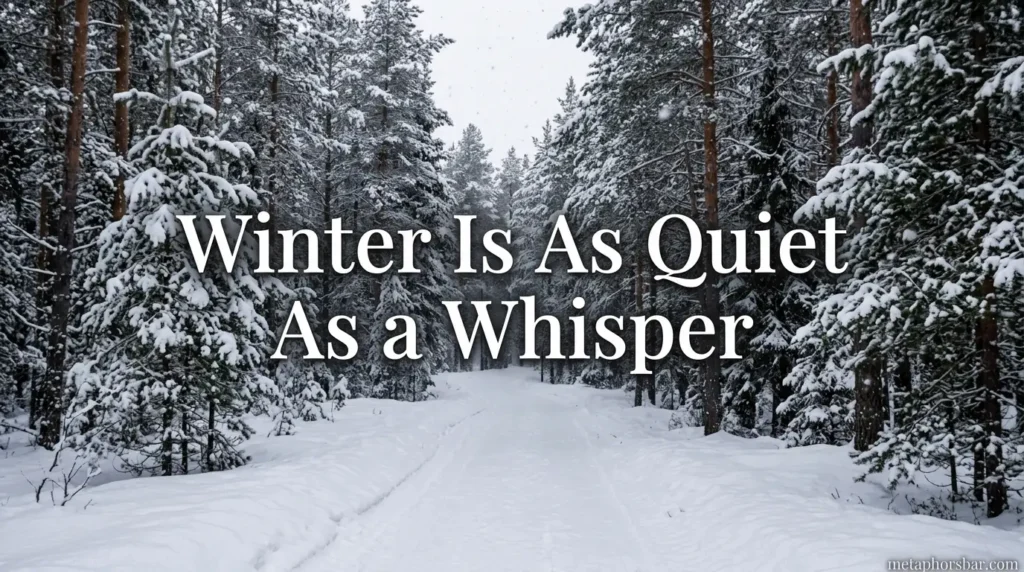
Meaning: Highlights stillness and calm.
Usage Insight: Suitable for soft, emotional scenes.
Examples:
- The streets were as quiet as a whisper at dawn.
- Winter moved through the trees like a whispered secret.
Winter Is Like a Locked Door
Meaning: Suggests pause, closure, or waiting.
Usage Insight: Strong in symbolic or reflective writing.
Examples:
- The frozen garden stood like a locked door to spring.
- Winter felt like a door closed gently but firmly.
Winter Is As Pale As Moonlight
Meaning: Describes the season’s soft, faded tones.
Usage Insight: Excellent for poetic imagery.
Examples:
- The sky was as pale as moonlight on fresh snow.
- Winter mornings glowed pale as silver light.
Winter Is Like an Old Wise Man
Meaning: Symbolizes wisdom, patience, and endurance.
Usage Insight: Works beautifully in reflective essays.
Examples:
- Winter stood like an old wise man watching the hills.
- The bare trees looked like elders telling silent stories.
Winter Is As Still As Frozen Time
Meaning: Captures the feeling of suspended motion.
Usage Insight: Ideal for dramatic pauses in storytelling.
Examples:
- The lake was as still as frozen time.
- Winter held the village motionless, like time paused.
Winter Is Like a Glass Sculpture
Meaning: Fragile, delicate, and beautiful.
Usage Insight: Great for artistic or aesthetic writing.
Examples:
- Icicles hung like pieces of a glass sculpture.
- The trees shimmered like crystal art.
Winter Is As Lonely As an Empty Road
Meaning: Reflects isolation and quiet sadness.
Usage Insight: Perfect for emotional or introspective writing.
Examples:
- The snow-covered highway felt as lonely as an empty road at dusk.
- Winter evenings stretched on, lonely as silent streets.
Winter Is Like a Frozen Ocean
Meaning: Suggests vastness and still power.
Usage Insight: Works in grand landscape descriptions.
Examples:
- The plains looked like a frozen ocean beneath the sky.
- Winter spread across the fields like icy waves.
Winter Is As Crisp As Fresh Paper
Meaning: Emphasizes clarity and sharp air.
Usage Insight: Ideal for sensory detail.
Examples:
- The morning air was as crisp as fresh paper.
- Each breath felt clean and sharp like turning a new page.
Using similes well can transform ordinary descriptions into powerful imagery.
Be Specific
Avoid clichés. Instead of “cold as ice,” try something more original like “cold as forgotten marble.”
Match Emotion to Comparison
Choose comparisons that reflect mood—lonely scenes need lonely images.
Engage the Senses
Think about sight, sound, touch, smell, and even taste.
Use Similes Sparingly
Too many comparisons can overwhelm readers. Balance clarity with creativity.
Adapt to Genre
- Poems: Focus on rhythm and emotional depth.
- Stories: Use similes to reveal character feelings.
- Essays: Add vivid imagery while keeping clarity.
- Songs: Choose musical, rhythmic comparisons.
FAQs
1. What are metaphors for winter?
Metaphors for winter are figurative comparisons that describe winter symbolically, such as calling it a “sleeping giant” or “silent cathedral.”
2. What is the difference between similes and metaphors?
A simile uses “like” or “as” to compare two things, while a metaphor directly states that one thing is another.
3. Why are similes important in literature?
Similes in literature make writing more vivid, emotional, and memorable.
4. Can similes be used in academic writing?
Yes, but carefully. They should clarify ideas, not distract from analysis.
5. How do nature similes improve creative writing?
Nature similes connect emotions to familiar images, making writing relatable and powerful.
Conclusion
Metaphors for winter and carefully crafted similes do more than describe snow and cold air—they reveal silence, strength, loneliness, wisdom, and hope beneath the frost. Through meaningful comparisons, winter becomes a teacher, a guardian, a mirror, and even a promise of renewal. When you use figurative language examples thoughtfully, your writing gains clarity, emotional depth, and unforgettable imagery. Like trees standing resilient in the cold, strong similes endure in the reader’s memory long after the season has passed.