

Work is more than tasks, deadlines, and long hours—it is effort, ambition, frustration, growth, and purpose woven together. To describe these experiences clearly, writers often turn to similes and other figurative language examples that bring emotion and imagery into ordinary language. A simile compares two different things using “like” or “as,” helping readers see familiar ideas in fresh ways. Through comparisons, we make abstract experiences feel real and vivid.
Trees, for example, are powerful symbols of strength, growth, resilience, wisdom, and human emotion. Just like work, a tree requires patience, steady effort, and deep roots to thrive. In similes in literature and daily speech alike, trees and nature often represent endurance and quiet determination. When we use nature similes to describe work, we add depth and clarity to our words. In this article, you’ll discover 35 original similes—carefully structured and easy to use—that can strengthen your creative or academic writing.
What Is a Simile?
A simile is a figure of speech that compares two unlike things using the words like or as. It helps readers understand a concept by connecting it to something familiar.
Example: Her dedication at work was like the roots of a tree—deep, steady, and unseen, yet holding everything together.
This comparison paints a clearer emotional picture than simply saying “she was dedicated.”
Similes and Metaphors for Work
Below are 35 carefully crafted similes for work, each with meaning, usage insight, and two natural examples.
Work is like planting a tree in rocky soil.
Meaning: Progress requires patience and persistence despite difficulty. Usage Insight: Best for essays about resilience or long-term goals.
- Building this company felt like planting a tree in rocky soil.
- Studying for the exam was like planting a tree in rocky soil, slow but worthwhile.
Work is as steady as a tree growing ring by ring.
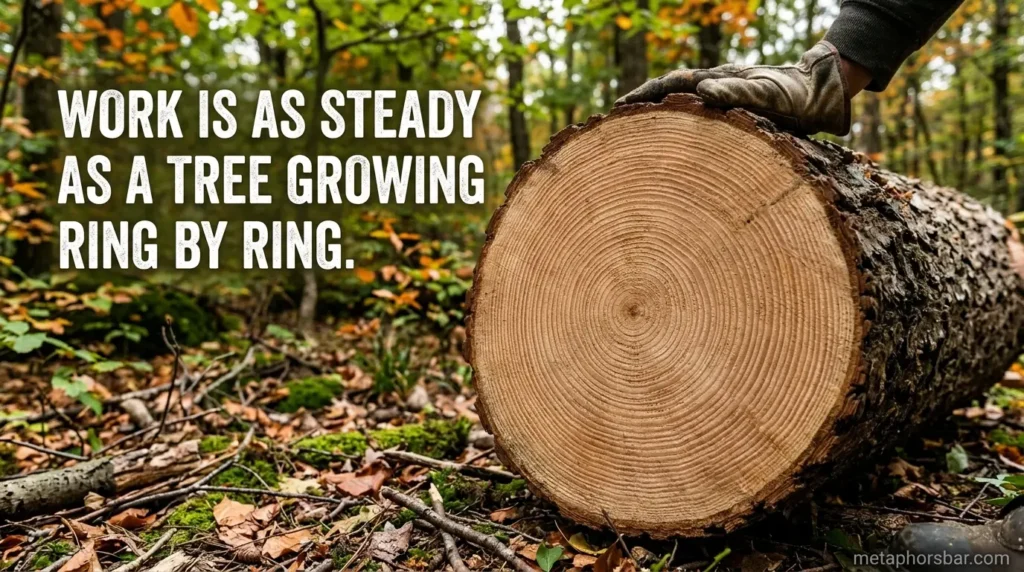
Meaning: Success builds gradually over time. Usage Insight: Great for reflective writing or motivational speeches.
- Her career grew as steady as a tree growing ring by ring.
- Improvement comes as steady as a tree adding silent rings each year.
Work is like climbing a mountain trail.
Meaning: It requires endurance and determination. Usage Insight: Ideal for motivational content or leadership discussions.
- Managing the project was like climbing a mountain trail.
- Entrepreneurship feels like climbing a mountain trail at dawn.
Work is as demanding as the tide returning to shore.
Meaning: Responsibilities are constant and recurring. Usage Insight: Works well in descriptive or reflective writing.
- Deadlines arrive as demanding as the tide returning to shore.
- Office tasks felt as constant as waves at high tide.
Work is like tending a garden through all seasons.
Meaning: Effort must continue despite changing conditions. Usage Insight: Useful for essays on adaptability.
- Running a business is like tending a garden through all seasons.
- Leadership feels like nurturing plants in unpredictable weather.
Work is as layered as the bark of an old oak.
Meaning: It contains complexity and hidden depth. Usage Insight: Great for analytical or narrative writing.
- Corporate life is as layered as the bark of an old oak.
- His responsibilities were as textured as ancient tree bark.
Work is like forging iron in a blazing fire.
Meaning: Pressure shapes strength. Usage Insight: Ideal for motivational speeches.
- The internship was like forging iron in a blazing fire.
- Challenges shaped her like iron under heat.
Work is as relentless as the rising sun.
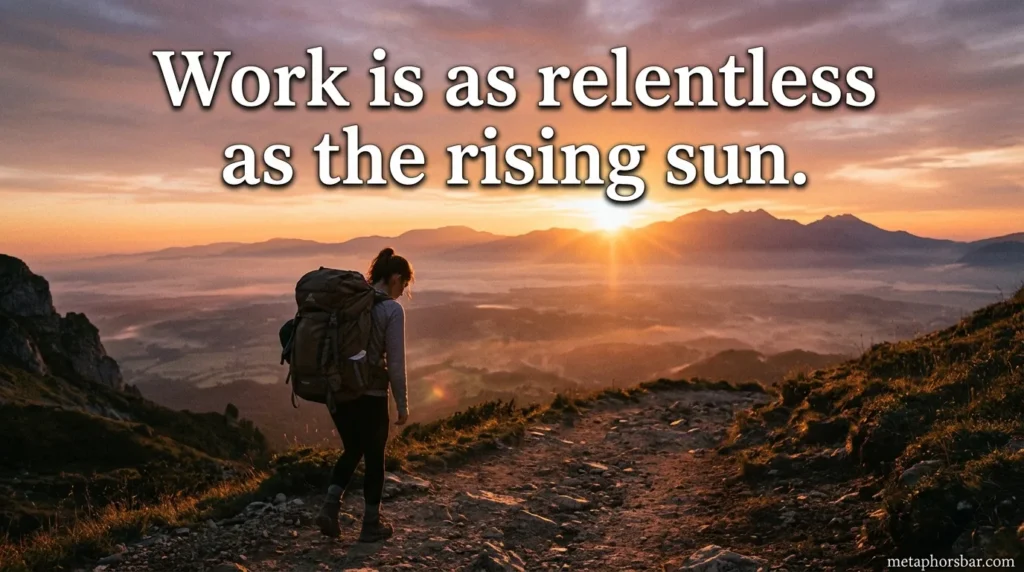
Meaning: It never stops or waits. Usage Insight: Effective in realistic portrayals of routine.
- Emails arrived as relentless as the rising sun.
- His schedule moved as surely as sunrise.
Work is like weaving threads into a tapestry.
Meaning: Every task contributes to a larger picture. Usage Insight: Useful in teamwork discussions.
- Each assignment was like weaving threads into a tapestry.
- Collaboration felt like crafting one colorful design.
Work is as fragile as a sapling in a storm.
Meaning: Early efforts can easily fail. Usage Insight: Ideal for startup or beginner struggles.
- The new business felt as fragile as a sapling in a storm.
- Her confidence wavered like a young tree in wind.
Work is like rowing against the current.
Meaning: Progress feels difficult and slow. Usage Insight: Perfect for describing resistance.
- Starting over was like rowing against the current.
- He pushed forward like a boat battling the tide.
Work is as patient as roots spreading underground.
Meaning: Growth happens quietly. Usage Insight: Good for long-term projects.
- His efforts were as patient as roots underground.
- Change unfolded quietly beneath the surface.
Work is like building a bridge stone by stone.
Meaning: Success requires steady effort. Usage Insight: Strong for academic essays.
- Writing the thesis was like building a bridge stone by stone.
- Trust grows like careful construction.
Work is as sharp as winter wind.
Meaning: It can be harsh and demanding. Usage Insight: Effective in emotional narratives.
- Criticism felt as sharp as winter wind.
- The pressure cut through him like cold air.
Work is like lighting a candle in darkness.
Meaning: Effort brings hope. Usage Insight: Great for inspirational writing.
- Teaching felt like lighting a candle in darkness.
- Her kindness was a small flame in a dim office.
Work is as deep as forest roots.
Meaning: It connects to identity and purpose. Usage Insight: Ideal for personal essays.
- His craft ran as deep as forest roots.
- Dedication grounded her like ancient trees.
Work is like chasing the horizon.
Meaning: Goals constantly move forward. Usage Insight: Effective in ambition themes.
- Promotion felt like chasing the horizon.
- Success stretched endlessly before her.
Work is as heavy as a rain-soaked coat.
Meaning: It can feel burdensome. Usage Insight: Use in emotional realism.
- Responsibility felt as heavy as a rain-soaked coat.
- Stress clung to him like wet fabric.
Work is like carving marble into art.
Meaning: Skill develops through effort. Usage Insight: Creative writing.
- Editing was like carving marble into art.
- Mastery emerged slowly from rough drafts.
Work is as unpredictable as spring weather.
Meaning: Situations change quickly. Usage Insight: Workplace narratives.
- The market shifted as unpredictable as spring weather.
- Plans changed like sudden rain showers.
Work is like a marathon through winding roads.
Meaning: Long-term endurance matters more than speed. Usage Insight: Career-focused writing.
- His career unfolded like a marathon through winding roads.
- Success requires pacing, not sprinting.
Work is as bright as sunlight after rain.
Meaning: Achievement brings joy. Usage Insight: Celebratory tone.
- Victory felt as bright as sunlight after rain.
- Relief spread like warm sunshine.
Work is like assembling pieces of a puzzle.
Meaning: Each part matters. Usage Insight: Analytical essays.
- Research felt like assembling puzzle pieces.
- Every detail found its place.
Work is as silent as snowfall at night.
Meaning: Progress can be unnoticed. Usage Insight: Reflective writing.
- Improvement came as silent as snowfall.
- Growth happened quietly overnight.
Work is like steering a ship in fog.
Meaning: Direction isn’t always clear. Usage Insight: Leadership themes.
- Management felt like steering a ship in fog.
- He navigated uncertainty carefully.
Work is as fierce as a storm at sea.
Meaning: It can feel overwhelming. Usage Insight: Dramatic writing.
- Deadlines hit as fierce as a storm at sea.
- Chaos roared like crashing waves.
Work is like building a fire from sparks.
Meaning: Small efforts lead to bigger results. Usage Insight: Motivational essays.
- Innovation began like building a fire from sparks.
- Small ideas grew into bright flames.
Work is as rooted as an ancient cedar.
Meaning: Stability and strength. Usage Insight: Corporate culture discussions.
- Their values stood as rooted as an ancient cedar.
- Tradition anchored the company.
Work is like sculpting clay with steady hands.
Meaning: Patience shapes success. Usage Insight: Artistic writing.
- Coaching felt like sculpting clay.
- Guidance molded raw talent.
Work is as endless as the open sky.
Meaning: Tasks never fully disappear. Usage Insight: Realistic tone.
- Emails seemed as endless as the open sky.
- Projects stretched infinitely.
Work is like crossing a desert toward an oasis.
Meaning: Reward follows hardship. Usage Insight: Inspirational stories.
- Graduation felt like reaching an oasis.
- Effort carried her across dry miles.
Work is as balanced as branches in the wind.
Meaning: Adaptability is key. Usage Insight: Teamwork themes.
- Leadership stayed as balanced as branches.
- Flexibility kept them upright.
Work is like sharpening a blade on stone.
Meaning: Repetition improves skill. Usage Insight: Skill development writing.
- Practice was like sharpening a blade.
- Each attempt refined his edge.
Work is as nourishing as rain to roots.
Meaning: It supports growth. Usage Insight: Positive career reflections.
- Mentorship was as nourishing as rain to roots.
- Encouragement helped her flourish.
Work is like building a nest twig by twig.
Meaning: Stability forms gradually. Usage Insight: Life-building narratives.
- Savings grew like a nest built twig by twig.
- Security formed slowly over years.
How to Use Similes Effectively in Writing
- Choose relatable comparisons. Nature similes often work because readers easily visualize them.
- Match tone to purpose. Gentle similes suit reflective essays; intense comparisons fit dramatic stories.
- Avoid clichés. Fresh imagery feels more powerful than overused phrases.
- Use sparingly. Too many comparisons can overwhelm your writing.
- Connect emotion to imagery. The best similes link feeling with description.
Similes in literature are memorable because they combine clarity with imagination. Whether you’re writing poems, stories, academic essays, or songs, comparisons make your ideas vivid and emotionally resonant.
FAQs
1. What are some strong metaphors for work?
Work is often compared to climbing a mountain, planting a tree, or running a marathon—each emphasizing endurance and growth.
2. What is the difference between similes and metaphors?
A simile uses “like” or “as” to compare, while a metaphor states that one thing is another without those words.
3. Why are nature similes effective?
Nature similes connect abstract ideas to universal experiences like seasons, storms, or trees, making writing more relatable.
4. Can similes be used in academic writing?
Yes. When used carefully, similes clarify complex ideas and strengthen explanations.
5. How do similes improve creative writing?
They add imagery, emotional depth, and memorable comparisons that engage readers.
Conclusion
Metaphors for work and carefully chosen similes transform ordinary descriptions into powerful imagery. Through thoughtful comparisons—especially nature similes—you can show strength, resilience, struggle, patience, and achievement in ways that feel alive and relatable. Figurative language examples deepen emotional connection and sharpen clarity. Whether you’re crafting a poem, essay, story, or speech, these similes for work will help you communicate with richness and confidence. When language grows like a strong tree—rooted in meaning and reaching toward imagination—your writing becomes unforgettable.