
Metaphors for Cold Weather: When the Air Feels Like Glass
A Morning That Bites Before You Even Speak
You step outside, and the world seems to inhale sharply.
The air nips at your cheeks, the wind slips through your coat like a secret, and even the silence feels frosted. Tree branches glitter with a hard, pale shine. Pavements hold the ghost of last night’s frost. The whole day seems wrapped in a quiet blue hush, as if winter has lowered its voice and asked everything to whisper.
That is the strange beauty of cold weather: it is not only temperature, but atmosphere. It changes how we move, how we speak, how we remember. It can feel like a locked window, a silver blade, a sleeping giant, or a blanket pulled tight around the earth.
Metaphors for cold weather help us describe that feeling with more than numbers on a thermometer. They turn cold into image, motion, emotion, and story. That matters because weather is never just weather in language—it often becomes mood, memory, tension, comfort, or struggle. In writing, poetry, captions, essays, and storytelling, the right metaphor can make a winter scene unforgettable.
Metaphors for Cold Weather: A Silver Blade in the Air
Meaning: Cold as Something Sharp, Clear, and Unforgiving
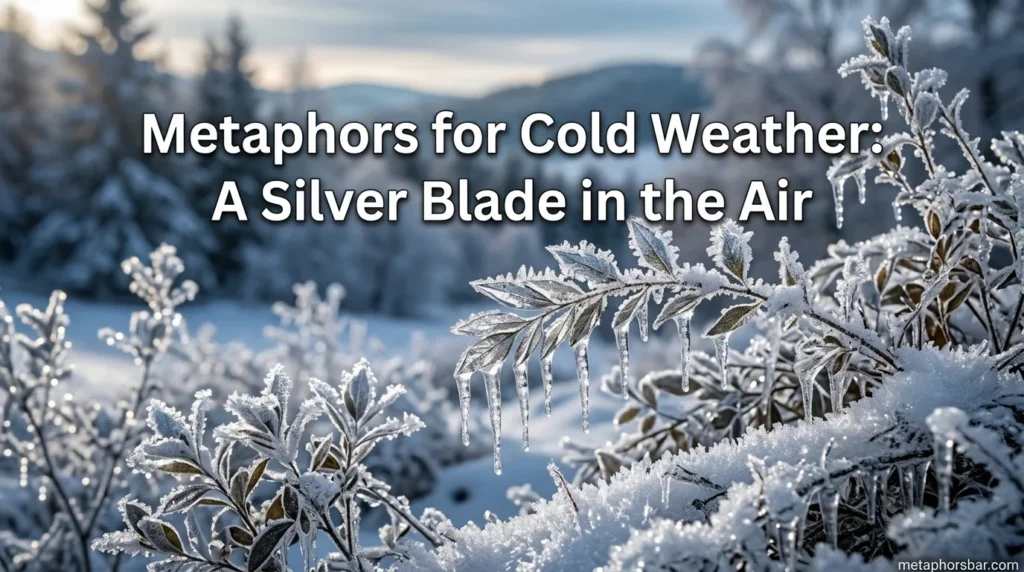
One of the most vivid metaphors for cold weather is to compare it to a blade. Cold can feel sharp against skin, sudden in the lungs, and precise in its bite. Like a blade, it does not ask permission. It slices through layers, revealing how little warmth is left to protect you.
This metaphor works especially well when the cold is severe, windy, or emotionally intense. It suggests danger, precision, and a kind of brightness that is beautiful even while it stings.
Example Sentence or Scenario
The wind swept through the street like a silver blade, cutting through scarves, collars, and every attempt at comfort.
Alternative Ways to Express It
Optional Sensory or Emotional Details
Imagine your breath catching halfway in your throat, your nose stinging, your fingers going stiff in your gloves. There is a clean, metallic feel to the air, as if winter has sharpened the whole world into a thinner line.
Mini Storytelling Reference
In old folktales, winter often arrives as a force with teeth—merciless, elegant, and impossible to ignore. That same feeling appears in literature whenever writers describe frost with language that feels hard, bright, and dangerous. The blade metaphor belongs to that tradition: beautiful, but not gentle.
Why This Metaphor Works
Use this metaphor when you want cold weather to feel dramatic, severe, or memorable. It is especially effective in fiction, personal essays, and descriptive writing where the cold needs to feel active rather than passive.
Metaphors for Cold Weather: A White Blanket Over the World
Meaning: Cold as Covering, Stillness, and Silence
Not all cold feels sharp. Sometimes it feels soft, heavy, and quiet. In that case, cold weather can be compared to a white blanket covering everything. Snow, frost, and frozen mornings can make the world seem tucked in, paused, or gently erased.
This metaphor carries comfort as well as stillness. A blanket can protect, but it can also trap. That dual meaning gives the image emotional depth.
Example Sentence or Scenario
By dawn, the neighborhood had vanished under a white blanket, each rooftop and fence line softened into a hushed winter dream.
Alternative Ways to Express It
- A quilt of frost
- A cover of snow
- A sheet of winter silence
- A sleepy cloak over the earth
Optional Sensory or Emotional Details
Think of muffled footsteps, the soft crunch of snow, and the way familiar shapes disappear under pale light. The air feels still. Sounds travel differently. Even time seems to slow down.
Mini Storytelling or Cultural Reference
This image appears often in children’s stories and holiday imagery, where snow transforms ordinary streets into something enchanted. It also echoes pastoral winter writing, where landscapes seem to sleep beneath a pale covering until spring returns.
Why This Metaphor Works
This metaphor is useful when cold weather feels calm, beautiful, or dreamlike. It can also suggest isolation or dormancy, depending on the tone of the piece.
Metaphors for Cold Weather: A Sleeping Giant Beneath the Sky
Meaning: Cold as Latent Power and Quiet Force
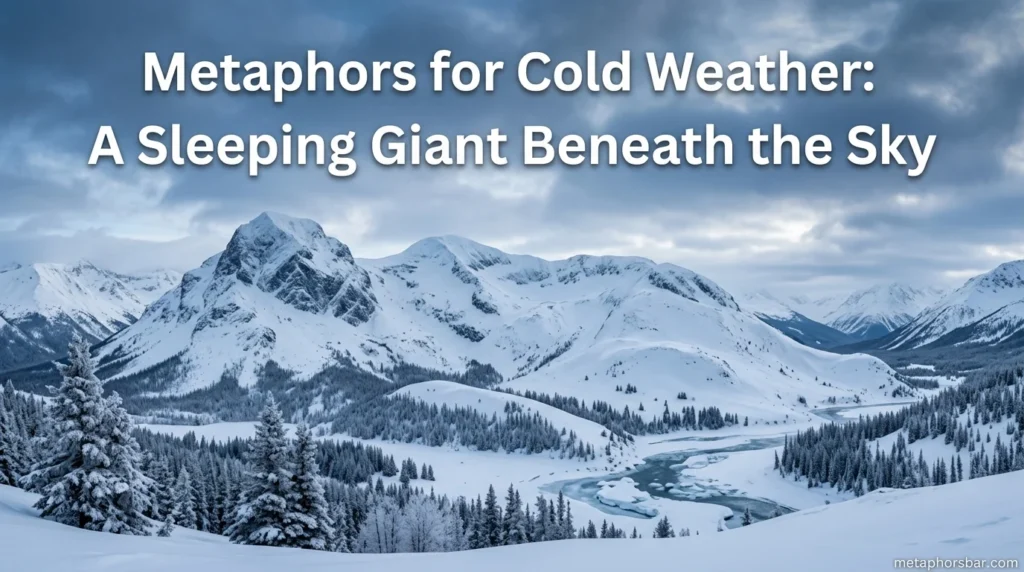
Cold weather is not always dramatic on the surface, but it can feel powerful underneath. Comparing winter to a sleeping giant suggests that the season is massive, dormant, and quietly commanding. It is not moving quickly, but it shapes everything around it.
This metaphor is ideal for cold weather that feels vast, heavy, or dominant. It reminds us that winter is not weak just because it is still.
Example Sentence or Scenario
The valley lay under a sleeping giant of winter, immense and quiet, as though the whole land was waiting for the moment it would wake.
Alternative Ways to Express It
- A giant resting under ice
- A frozen force
- A giant breathing slowly through snow
- A winter titan asleep in the hills
Optional Sensory or Emotional Details
Picture frozen lakes, endless gray skies, and distant trees standing like small witnesses to something much larger than themselves. The atmosphere feels ancient, patient, and powerful.
Mini Storytelling Reference
This metaphor has the feel of myths and epic tales, where nature is never just scenery but a presence with intent. It fits especially well in writing that wants to make winter feel grand, symbolic, or almost legendary.
Why This Metaphor Works
Use it when cold weather feels enormous, persistent, or awe-inspiring. It gives the season weight and personality, making the landscape feel alive.
Metaphors for Cold Weather: How to Use These Images in Writing and Daily Life
For Poetry, Essays, and Fiction
The best cold-weather metaphors match the emotional tone you want.
If the scene is harsh, choose images like blade, bite, or iron. If the scene is peaceful, choose blanket, hush, or stillness, If the scene is powerful, choose giant, kingdom, or force.
You can also combine sensory details with metaphor for extra depth:
- “The cold moved like a blade through the alley.”
- “Snow laid a blanket over the rooftops.”
- “Winter slept like a giant beneath the hills.”
For Social Media Captions
Metaphors can make winter captions feel more vivid and shareable.
Examples:
- “Today’s wind felt like a silver blade.”
- “The city woke up under a blanket of snow.”
- “Winter has arrived like a giant with no intention of leaving.”
These lines are short, image-rich, and emotionally resonant.
For Daily Conversation
Metaphors also make everyday speech more colorful.
Instead of saying “It is really cold,” you might say:
- “The air is biting today.”
- “It feels like winter wrapped the whole town in ice.”
- “The wind is sharp enough to cut.”
That kind of language brings ordinary weather to life.
Bonus Tips for Stronger Metaphors
- Pair cold with a texture: sharp, heavy, soft, glassy, metallic.
- Let the metaphor reflect emotion, not just temperature.
- Avoid using too many images at once; one strong metaphor is usually enough.
- Use contrast—warmth beside cold—to make the image stronger.
- In storytelling, let cold weather affect what characters do, not just what they see.
Interactive Exercise
Try this creative prompt:
Look out a window and describe the weather in three different ways:
- As something sharp
- As something soft
- As something powerful
For example:
- Sharp: “The cold was a knife at the throat of morning.”
- Soft: “Snow laid a quiet blanket over the yard.”
- Powerful: “Winter slept like a giant across the hills.”
Then rewrite each one in your own voice.
Metaphors for Cold Weather: More Creative Ideas to Inspire Your Voice
Ice as a Mirror
Cold weather can also be described through ice reflecting the world back to itself. This works well when the season feels clear, stripped down, or emotionally revealing.
Example: “The pond froze into a mirror, holding the sky in its surface.”
Frost as Lace
Frost often looks delicate and intricate, making it a beautiful metaphor for fragile patterns in nature.
Example: “Frost traced lace across the windowpanes.”
Wind as an Invisible Animal
When winter wind moves unpredictably, it can feel alive, restless, and untamed.
Example: “The wind prowled around the house like an invisible animal.”
FAQs
1. What are metaphors for cold weather?
They are descriptive comparisons that help explain cold temperatures, winter landscapes, or frosty feelings in vivid, imaginative language.
2. Why are metaphors useful when describing cold weather?
They make weather feel more alive and emotionally rich, helping readers picture the scene and feel its mood.
3. What is a common metaphor for cold weather?
A white blanket is one of the most common, especially when snow covers the ground and creates a quiet, soft effect.
4. How can I make cold-weather metaphors more original?
Use specific details, sensory language, and emotional tone. Instead of saying “cold as ice,” try “cold like a silver blade in the morning air.”
5. Can cold weather metaphors be comforting, not just harsh?
Yes. Cold can feel peaceful, still, clean, and beautiful, so metaphors like blanket, hush, or lace work very well.
6. Where can I use these metaphors?
You can use them in poetry, fiction, essays, captions, speeches, journaling, classroom writing, and everyday conversation.
7. How do I choose the right metaphor?
Decide whether the cold feels sharp, soft, powerful, lonely, or beautiful, then choose an image that matches that feeling.
Conclusion
Cold weather is more than a drop in temperature. It is a mood with texture, a silence with shape, a season that can cut, cover, or command. Through metaphors, we give that experience a voice.
A blade in the air. A blanket over the world. A sleeping giant beneath the sky. Each image helps us understand winter not only as a physical force, but as an emotional one too.
And that is the beauty of metaphor: it lets us feel the weather twice—once on the skin, and once in the imagination.