

Imagine standing in a crowded room during a celebration. Laughter floats through the air, glasses clink, and conversations sparkle with excitement. Yet, in one corner, someone watches another person’s success, popularity, or happiness and feels an uncomfortable tightening in their chest. It starts as a small flicker, almost unnoticed, but soon it grows into something harder to ignore. That feeling is jealousy—a complex emotion that has inspired stories, poems, and conversations for centuries.
Because jealousy can be difficult to describe directly, writers often rely on metaphors for jealousy to capture its intensity and emotional complexity. Metaphors transform abstract feelings into vivid images, helping readers understand what jealousy feels like and how it affects people.
Whether you’re writing fiction, poetry, essays, speeches, or social media content, these metaphors can add depth and emotional power to your words.
Why Metaphors for Jealousy Matter
They Make Emotions Easier to Visualize
Jealousy is an internal feeling. Metaphors give it shape, color, and movement, making it easier for readers to imagine.
They Add Emotional Depth
Instead of simply saying a character felt jealous, a metaphor shows how that jealousy behaves, grows, or influences their actions.
They Improve Creative Writing
Strong metaphors create memorable scenes and help readers connect with characters and situations on a deeper level.
Metaphors for Jealousy as a Green-Eyed Monster
Meaning and Explanation
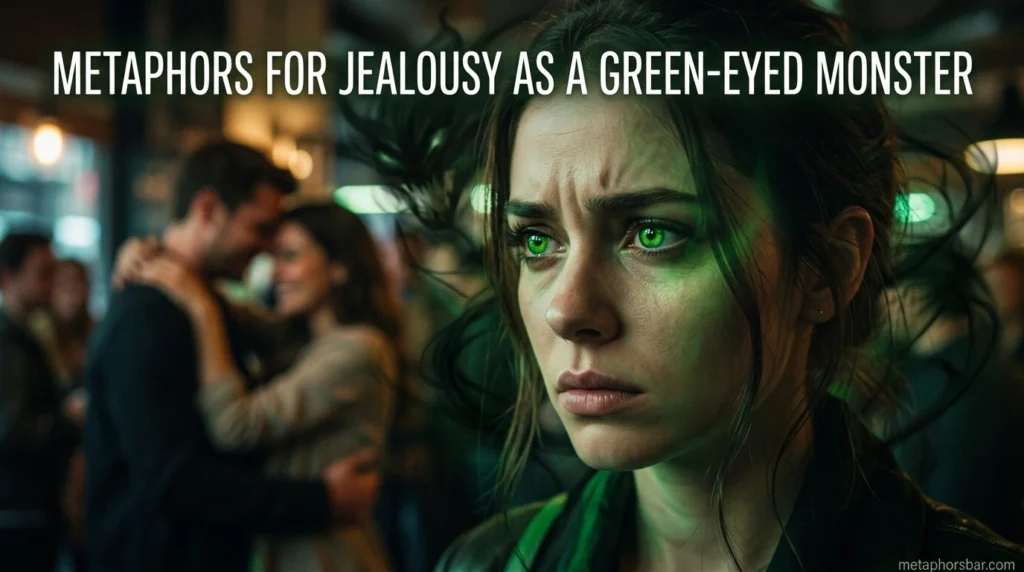
One of the most famous metaphors for jealousy is the green-eyed monster, a phrase popularized by William Shakespeare in Othello. This metaphor portrays jealousy as a dangerous creature that consumes reason and distorts perception.
It emphasizes jealousy’s ability to grow beyond control if left unchecked.
Example Sentence or Scenario
“The green-eyed monster whispered in his ear every time he saw his rival succeed.”
This metaphor works especially well in fiction and dramatic writing.
Alternative Ways to Express It
- a beast of envy
- a lurking creature
- a shadow of resentment
- an emotional predator
- a monster fed by comparison
Sensory and Emotional Details
Imagine hearing low growls in the darkness or sensing a creature lurking just beyond sight. Emotionally, this metaphor conveys unease, obsession, and internal conflict.
Mini Storytelling Touch
In many classic stories, characters allow jealousy to influence their choices, often leading to regret. The image of a monster reminds us how powerful unchecked envy can become.
Literary Reference
The phrase “green-eyed monster” remains one of literature’s most enduring descriptions of jealousy and is still widely used today.
Metaphors for Jealousy as a Fire
Meaning and Explanation
Fire symbolizes intensity, destruction, and rapid growth. Like flames, jealousy can start with a tiny spark and spread quickly if fueled by comparison, insecurity, or resentment.
This metaphor highlights the consuming nature of jealousy.
Example Sentence or Scenario
“Jealousy was a fire smoldering beneath her calm expression.”
This image works well when describing emotions that gradually build over time.
Alternative Ways to Express It
- burning envy
- flames of resentment
- sparks of comparison
- a wildfire of emotions
- a smoldering blaze
Sensory and Emotional Details
Picture the crackle of fire, rising heat, and glowing embers. Emotionally, this metaphor suggests discomfort, restlessness, and intensity.
Mini Storytelling Touch
A young artist spent years comparing her work to others online. What began as admiration slowly became jealousy. Eventually, she realized that constantly feeding those comparisons was like adding wood to a fire she wanted to extinguish.
Real-Life Example
Social media can sometimes amplify jealousy by encouraging comparisons between our lives and carefully curated snapshots of others.
Metaphors for Jealousy as Poison
Meaning and Explanation
Poison works slowly, often affecting the body before symptoms become obvious. As a metaphor, jealousy as poison represents how envy can quietly damage relationships, self-esteem, and peace of mind.
This metaphor focuses on the long-term consequences of jealousy.
Example Sentence or Scenario
“Jealousy was poison in his thoughts, turning admiration into bitterness.”
This image is particularly effective when discussing toxic relationships or prolonged resentment.
Alternative Ways to Express It
- toxic envy
- bitterness in the bloodstream
- a venomous feeling
- corrosive resentment
- emotional contamination
Sensory and Emotional Details
Imagine a bitter taste lingering long after a sip. Emotionally, this metaphor conveys sadness, regret, and emotional harm.
Mini Storytelling Touch
Two friends worked together for years. When one received a promotion, the other allowed jealousy to grow. Instead of celebrating, resentment slowly poisoned their friendship until trust began to disappear.
Cultural Reference
Many moral stories and teachings throughout history compare envy to poison because it often harms the person experiencing it as much as anyone else.
How to Choose the Right Metaphor for Jealousy

Use the Green-Eyed Monster for Dramatic Conflict
This metaphor works best when highlighting obsession, rivalry, or emotional struggle.
Use Fire for Intensity and Escalation
Choose this image when jealousy grows quickly or threatens to overwhelm someone.
Use Poison for Long-Term Effects
This metaphor is ideal for showing how jealousy quietly damages relationships or self-perception over time.
Each metaphor captures a different side of jealousy, allowing writers to tailor their imagery to the situation.
Interactive Exercises for Practicing Metaphors for Jealousy
Exercise 1: Complete the Sentence
Finish this prompt three different ways:
“Jealousy is like ______ because ______.”
Examples:
- Jealousy is like fire because it grows when fed.
- Jealousy is like poison because it slowly changes how we think.
Exercise 2: Turn Emotion into Imagery
Think about a moment when someone felt jealous.
Ask yourself:
- What color would that feeling be?
- What sound would it make?
- What object resembles it?
Create a metaphor using your answers.
Exercise 3: Story Starter
Begin a paragraph with:
“Jealousy crept into the room like…”
Describe how it affects the people in the scene.
Exercise 4: Social Media Writing Challenge
Create a short quote using a jealousy metaphor.
Examples:
- “Comparison is the spark; jealousy is the flame.”
- “Don’t let envy write your story.”
Bonus Tips for Using Metaphors for Jealousy in Writing, Social Media, and Daily Life
In Fiction Writing
Use jealousy metaphors to reveal hidden emotions and create compelling character conflicts.
In Poetry
Jealousy pairs well with imagery involving shadows, storms, fire, and poison.
On Social Media
Metaphorical quotes can communicate emotional insights in a memorable way.
Examples:
- “Jealousy grows where gratitude fades.”
- “The green-eyed monster thrives on comparison.”
In Personal Reflection
Thinking about jealousy metaphorically can help identify and understand emotional patterns.
In Speeches and Presentations
Metaphors make discussions about emotions more engaging and relatable.
FAQs
1. What is a metaphor for jealousy?
A metaphor for jealousy is a figurative comparison that describes jealousy through imagery such as monsters, fire, poison, or storms.
2. What is the most famous metaphor for jealousy?
The most famous is the green-eyed monster, introduced by William Shakespeare.
3. Why are metaphors useful for describing jealousy?
They help readers visualize and emotionally connect with an otherwise invisible feeling.
4. Can jealousy metaphors be used in professional writing?
Yes, especially in essays, speeches, literature discussions, and creative content.
5. How do I create my own jealousy metaphor?
Think about how jealousy behaves and compare it to something with similar qualities, such as a fire, weed, shadow, or storm.
6. Are jealousy metaphors always negative?
Most are negative because jealousy is often associated with emotional discomfort, but some can emphasize self-awareness and growth.
7. What makes a strong metaphor for jealousy?
A strong metaphor is vivid, relatable, emotionally accurate, and easy to visualize.
Conclusion
Jealousy is one of the most complex human emotions. It can begin as a fleeting comparison and grow into something far more powerful. That is why metaphors are so effective—they give shape to a feeling that often remains hidden beneath the surface.
The green-eyed monster captures jealousy’s destructive potential. Fire highlights its intensity and rapid growth. Poison reveals its slow and harmful effects. Together, these metaphors provide powerful tools for understanding and expressing envy in writing and everyday reflection.
Whether you’re crafting a story, composing a poem, writing a speech, or exploring your own emotions, metaphors for jealousy can transform abstract feelings into unforgettable imagery that resonates with readers and leaves a lasting impression.