
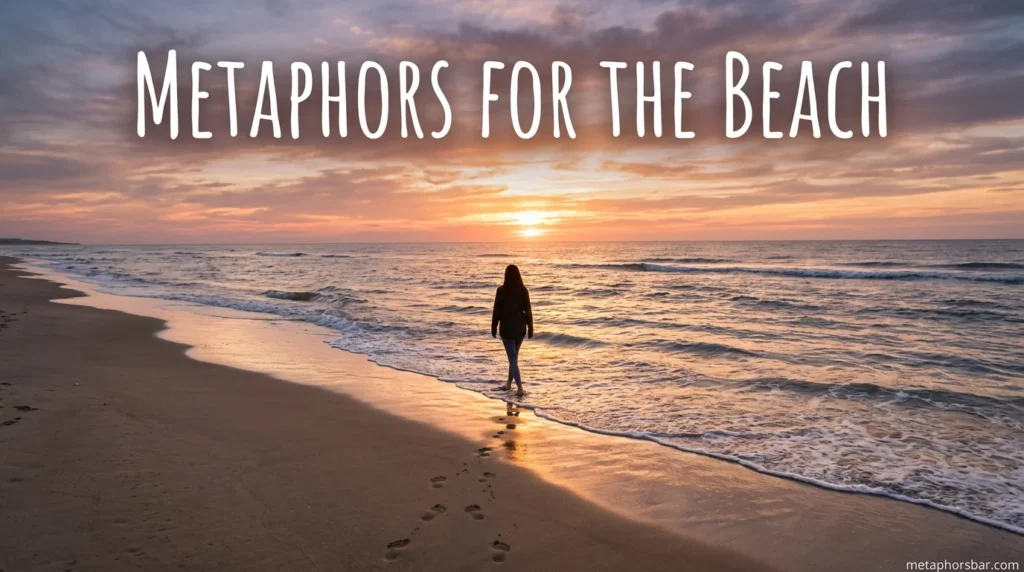
The first step onto the sand is always a small surprise. It gives way beneath your feet, warm and shifting, as if the earth itself is breathing. The air tastes like salt. Waves arrive and retreat with a rhythm older than memory. Somewhere, laughter rises and disappears into the wind. The beach is not just a place—it is a meeting point of elements, emotions, and moments that feel both fleeting and eternal.
That’s why metaphors for the beach are so powerful. A beach is more than sand and water; it is a threshold, a pause, a space between what was and what might be. Through metaphor, we can turn the shoreline into something vivid—an idea, a feeling, a story.
Whether you’re writing creatively, crafting captions, journaling, or simply trying to express what the beach means to you, metaphors help transform the ordinary into something unforgettable.
Why Metaphors for the Beach Matter in Writing and Expression
The beach is rich in symbolism. It represents transition, relaxation, reflection, and connection with nature. Because it sits between land and sea, it naturally lends itself to deeper meanings.
Using metaphors for the beach can help you:
- create immersive, sensory-rich descriptions
- express emotions like peace, nostalgia, or change
- add poetic depth to writing and storytelling
- make everyday scenes feel more meaningful
A plain sentence says, “The beach was calm.” A metaphor says, “The beach was a quiet breath between two waves of life.” That difference invites the reader into the experience.
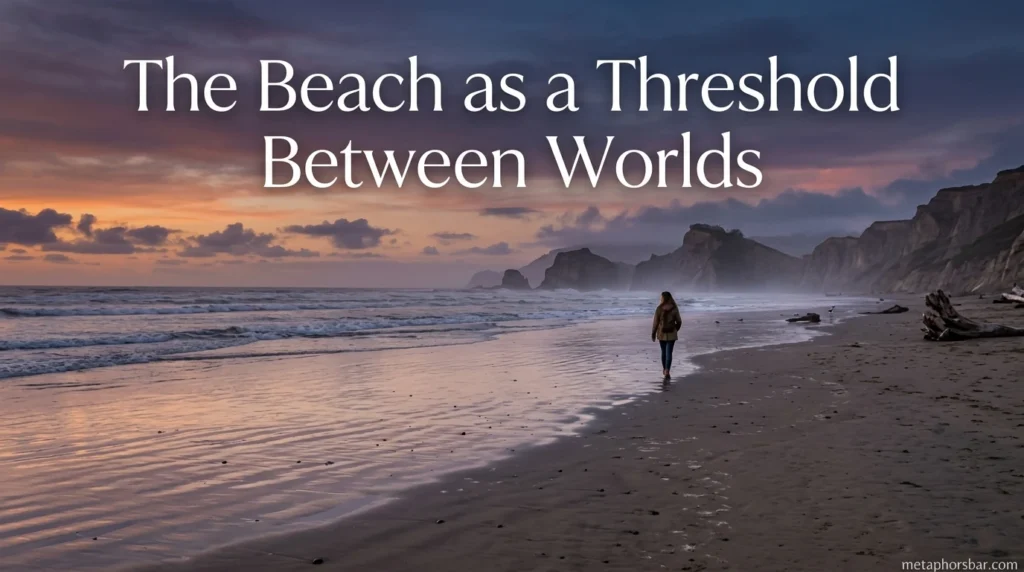
The Beach as a Threshold Between Worlds
Meaning and Explanation
This metaphor views the beach as a boundary—a place where two different worlds meet: land and sea, stability and motion, certainty and mystery. It symbolizes transition, decision, and the space between what is known and unknown.
This is especially useful when writing about change, reflection, or moments of choice.
Example Sentence or Scenario
She stood at the beach like it was a doorway, unsure whether to stay rooted on land or step into the shifting tide.
This could describe someone at a turning point in life—choosing a new path, leaving something behind, or stepping into uncertainty.
Alternative Ways to Express It
- the beach as a border of possibilities
- the shoreline as a meeting place of worlds
- the coast as a line between safety and adventure
- the sand as a pause between two journeys
Sensory or Emotional Details
You can feel the contrast between solid ground and moving water, hear the waves pulling back and returning, see footprints appearing and fading. Emotionally, it feels thoughtful, uncertain, and full of possibility.
Mini Storytelling Touch
A young traveler once arrived at a quiet beach before making a life-changing decision. He spent hours watching the waves cross the same line again and again. By sunset, he realized something: the boundary was not a barrier—it was a place of movement. He left the next day, carrying that lesson with him.
The Beach as Nature’s Playground
Meaning and Explanation
This metaphor captures the beach as a place of joy, freedom, and play. It highlights laughter, creativity, and the simple pleasure of being present.
This works well when describing childhood memories, vacations, or moments of carefree happiness.
Example Sentence or Scenario
The beach was nature’s playground, where the waves played tag with the shore and the wind scattered laughter like shells.
This might describe children building sandcastles, friends enjoying a sunny day, or families gathering by the sea.
Alternative Ways to Express It
- the shore as a canvas for play
- the sand as a field of imagination
- the beach as a joyful escape
- the waves as playful dancers
Sensory or Emotional Details
You can hear laughter, feel warm sand, see bright sunlight reflecting on water. Emotionally, it feels light, free, and full of energy.
Real-Life Example
Think of how people act differently at the beach—shoes come off, routines fade, and even adults rediscover a sense of play. There is something about the openness of the shore that invites joy.
Mini Storytelling Touch
A father once built a sandcastle with his daughter, carefully shaping towers that the tide would soon erase. When the waves finally washed it away, she laughed instead of crying. “Let’s build another,” she said. In that moment, the beach taught him something simple: joy doesn’t need to last to be real.
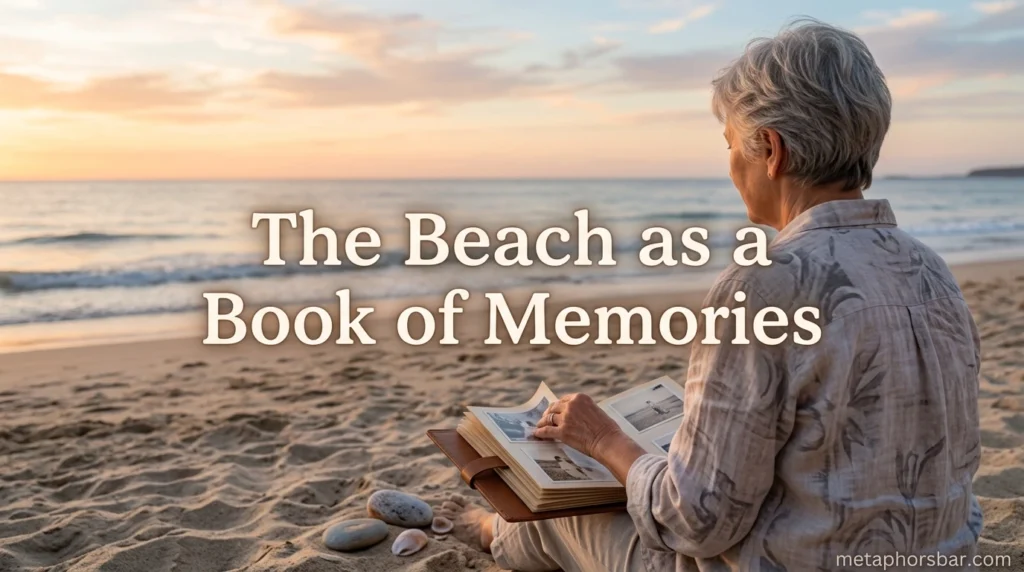
The Beach as a Book of Memories
Meaning and Explanation
This metaphor sees the beach as a place where moments are written and erased—like footprints in the sand. It symbolizes memory, time, and the fleeting nature of experiences.
It is especially powerful for reflective or emotional writing.
Example Sentence or Scenario
The beach was a book of memories, each wave turning the page and each footprint a story waiting to fade.
This could describe revisiting a place from childhood, remembering a past relationship, or reflecting on time passing.
Alternative Ways to Express It
- the sand as a page of stories
- the shoreline as a diary of moments
- footprints as written memories
- waves as erasers of time
Sensory or Emotional Details
You can see footprints disappearing, feel the soft sand shifting, hear the steady rhythm of waves. Emotionally, it feels nostalgic, gentle, and bittersweet.
Mini Storytelling Touch
A woman returned to the same beach she had visited years ago with someone she loved. The place looked the same, but everything felt different. As she walked along the shore, she realized the beach had not kept her memories—it had simply held space for them. The rest lived within her.
How to Choose the Right Beach Metaphor
Different metaphors highlight different meanings:
- Use a threshold metaphor for change and transition
- Use a playground metaphor for joy and freedom
- Use a memory metaphor for reflection and nostalgia
The best metaphor depends on the mood you want to create.
Interactive Exercises: Create Your Own Beach Metaphors
Exercise 1: Personal Reflection
Complete this sentence: “The beach feels like ______ because ______.”
Example: “The beach feels like a pause in time because everything slows down when I’m there.”
Exercise 2: Sensory Mapping
Describe the beach using:
- one sound
- one texture
- one color
- one emotion
Turn it into a metaphor.
Exercise 3: Story Starter
Begin a paragraph with: “The beach was like…”
Let your metaphor guide the story.
Exercise 4: Social Media Caption Practice
Try short metaphor-based captions:
- “Where the land lets go and the sea begins.”
- “Footprints fade, but moments stay.”
- “A playground written in sand.”
Bonus Tips for Using Beach Metaphors
In Writing
Use beach metaphors to create atmosphere in stories, poems, and essays.
In Social Media
They work beautifully with travel photos, sunsets, and reflective posts.
In Daily Life
They can help you express feelings of calm, change, or nostalgia.
In Conversations
Metaphors can make your experiences more vivid and engaging.
Keep It Natural
Let the metaphor flow from your experience rather than forcing it.
FAQs About Metaphors for the Beach
1. What is a metaphor for the beach?
A metaphor for the beach is a figurative comparison that uses the beach to represent ideas like change, joy, or memory.
2. Why are beach metaphors effective?
Because the beach combines natural elements and emotions, making it rich in symbolism.
3. Can beach metaphors be emotional?
Yes. They can express peace, nostalgia, happiness, or reflection.
4. What is a simple beach metaphor?
The beach is a doorway between worlds.
5. How do I create my own beach metaphor?
Think about how the beach feels to you and compare it to something with similar qualities.
6. Are beach metaphors only for creative writing?
No. They can be used in social media, conversations, and personal reflection.
7. What makes a strong beach metaphor?
Clarity, emotional connection, and vivid imagery.
Conclusion
The beach is more than a place—it is a feeling, a memory, a moment suspended between land and sea. Through metaphors, we can capture that feeling and carry it into our words.
A threshold, a playground, a book of memories—each metaphor reveals a different side of the shore. And like the waves themselves, these images come and go, leaving something behind each time.
So the next time you stand by the water, listen closely. The beach is already telling a story. All you need to do is find the metaphor that lets it speak.